AC Low Voltage Distribution Cabinets: The Busbar Clearance Decides the Rating
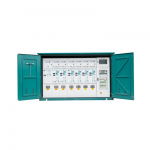
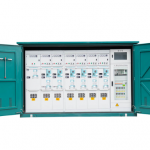
AC low voltage distribution cabinets are the enclosures that receive power from a transformer and distribute it to the circuits in a building or a plant. Buyers compare cabinet size, breaker brand, and IP rating. The specification that decides whether the cabinet can carry its rated current safely is the busbar clearance, and it is the part of the design the buyer evaluates least.
The busbar clearance is the distance between the live busbars and between the busbars and the enclosure. That distance determines the dielectric strength of the assembly and the heat dissipation. A clearance that is too small allows a flashover under fault conditions or at high altitude, where the air’s dielectric strength is lower. One that is too large increases the cabinet’s size and cost.
The busbar’s cross-section determines the current rating. A busbar that is too small heats up under load, which raises the temperature inside the cabinet and derates the breakers. One that is too large adds cost and weight. Factories that calculate the busbar’s cross-section for the current and the ambient temperature produce cabinets that run cool.
The busbar’s support and its bracing determine the cabinet’s short-circuit withstand. A busbar that is not braced for the fault current bends or separates under a short circuit, which creates an arc. Factories that design the bracing for the prospective fault current produce cabinets that withstand a fault without damage.
The internal arrangement affects the heat dissipation and the access. A cabinet with the breakers arranged in a single row dissipates heat better than one with the breakers stacked. One with the busbars at the rear allows access to the breakers from the front. Factories that design the arrangement for the heat and the access produce cabinets that are practical.
The enclosure’s IP rating determines whether the cabinet can be installed in a dusty or wet environment. A cabinet that is rated for indoor use may fail outdoors. Factories that specify the enclosure for the installation produce cabinets that protect the components.
The ventilation affects the temperature rise. A cabinet that is sealed and not ventilated heats up under load. One with filtered ventilation maintains a lower temperature. Factories that design the ventilation for the heat load produce cabinets that run within their limits.
The practical question for a buyer is not the cabinet size or the breaker brand. It is the busbar clearance and the bracing. Those two answers decide whether the cabinet carries its rated current safely. A cabinet that passes a dielectric test when new and flashes over under fault was built with a clearance that treated the fault as a detail.