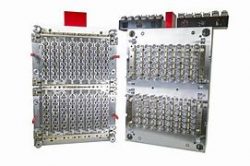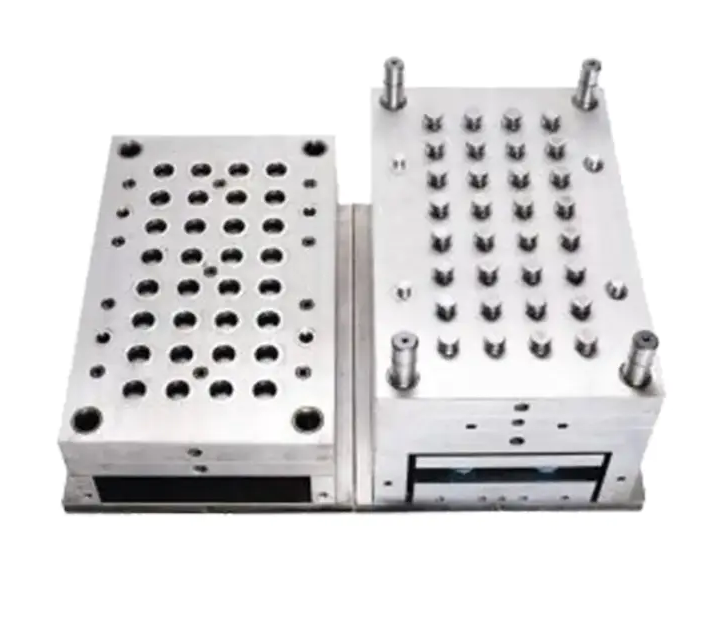
Cap Mold: Tiny Tool, Enormous Production Responsibility
Thread form geometry machined into a cap mold must conform to closure-finish standards matching the bottle neck the cap will seal against — pitch, flank angle, and thread depth tolerances measured in hundredths of a millimeter determine application torque, removal torque, and tamper-evidence band performance in the finished closure. Tamper-evident band design features incorporated into a cap mold — including the bridges connecting the band to the cap skirt — require steel geometry fine enough to produce fragile-looking connections that break cleanly on first opening yet survive the rigors of high-speed capping machine application without premature failure.
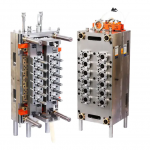
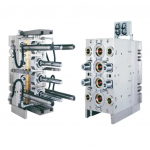
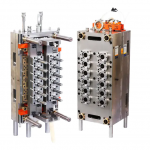
Unscrewing mechanisms inside a cap mold eject threaded closures without stripping newly formed threads, using synchronized rotary or rack-driven core pull systems that add mechanical complexity compared to straight-pull tools but are non-negotiable for internally threaded cap production. Material flow balance across a high-cavity cap mold relies on precisely calculated runner geometry that delivers equal pressure and temperature to every gate simultaneously, preventing the fill imbalance that produces dimensional variation between cavities and generates sorting losses downstream.