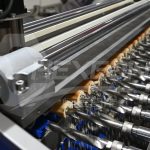
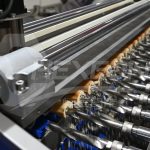
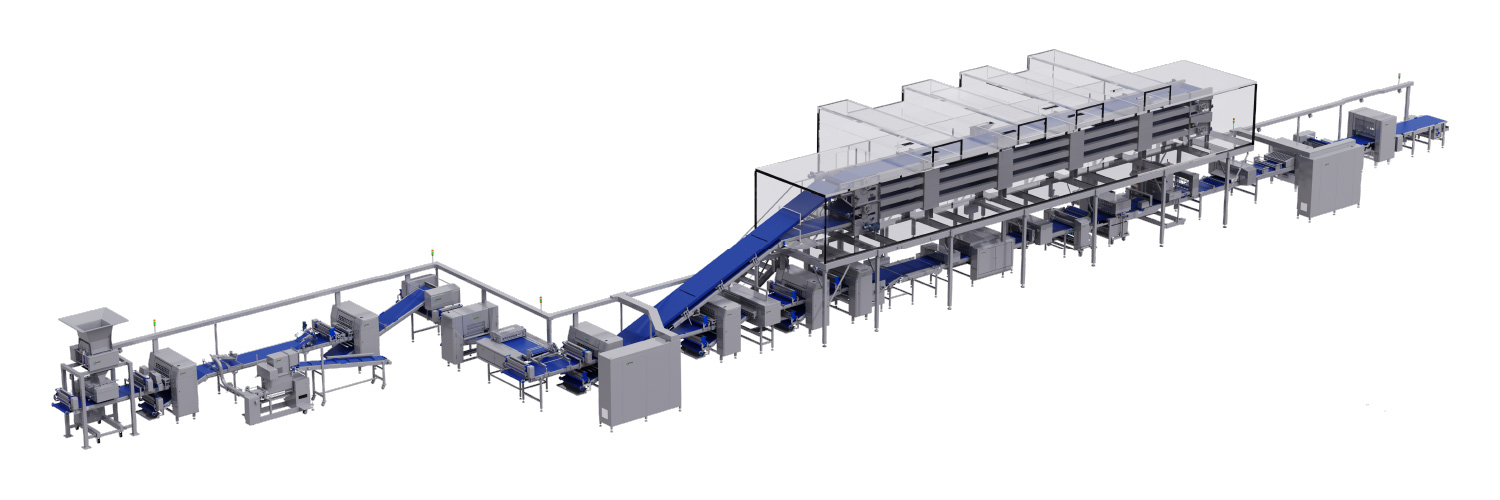
Ciabatta dough shaping line
Ciabatta has become a popular choice for bakeries seeking to combine artisan-style quality with large-scale production. Its thin crust, soft interior, irregular shape, and open crumb are highly attractive to consumers, but they also make ciabatta one of the more challenging bread products to automate.
For industrial bakeries, the real question is not simply how fast a Ciabatta dough shaping line can operate. The more important question is how automation can increase production while preserving the delicate dough structure that gives ciabatta its characteristic texture.
Why Is Ciabatta Difficult to Shape?
High-hydration dough is soft, extensible, and more sensitive to mechanical pressure than conventional bread dough. During fermentation, gas cells develop throughout the gluten network and contribute to ciabatta’s open crumb. Excessive compression, stretching, or unstable transferring can disturb this structure before baking.
This makes low-stress dough handling a key consideration for industrial ciabatta production. Accurate portioning, controlled forming, stable conveying, and synchronized processing should work together rather than operate as isolated stages. HEXEON’s recent technical analysis specifically highlights these factors when processing high-hydration ciabatta dough.