Fluoride Treatment for Kids Noida: A Simple Way to Help Prevent Cavities
Children’s teeth are still developing, making good oral hygiene especially important during the early years. Fluoride treatment for kids in Noida can provide additional protection against tooth decay by helping strengthen tooth enamel and making teeth more resistant to acids that cause cavities.
What Is Fluoride Treatment?
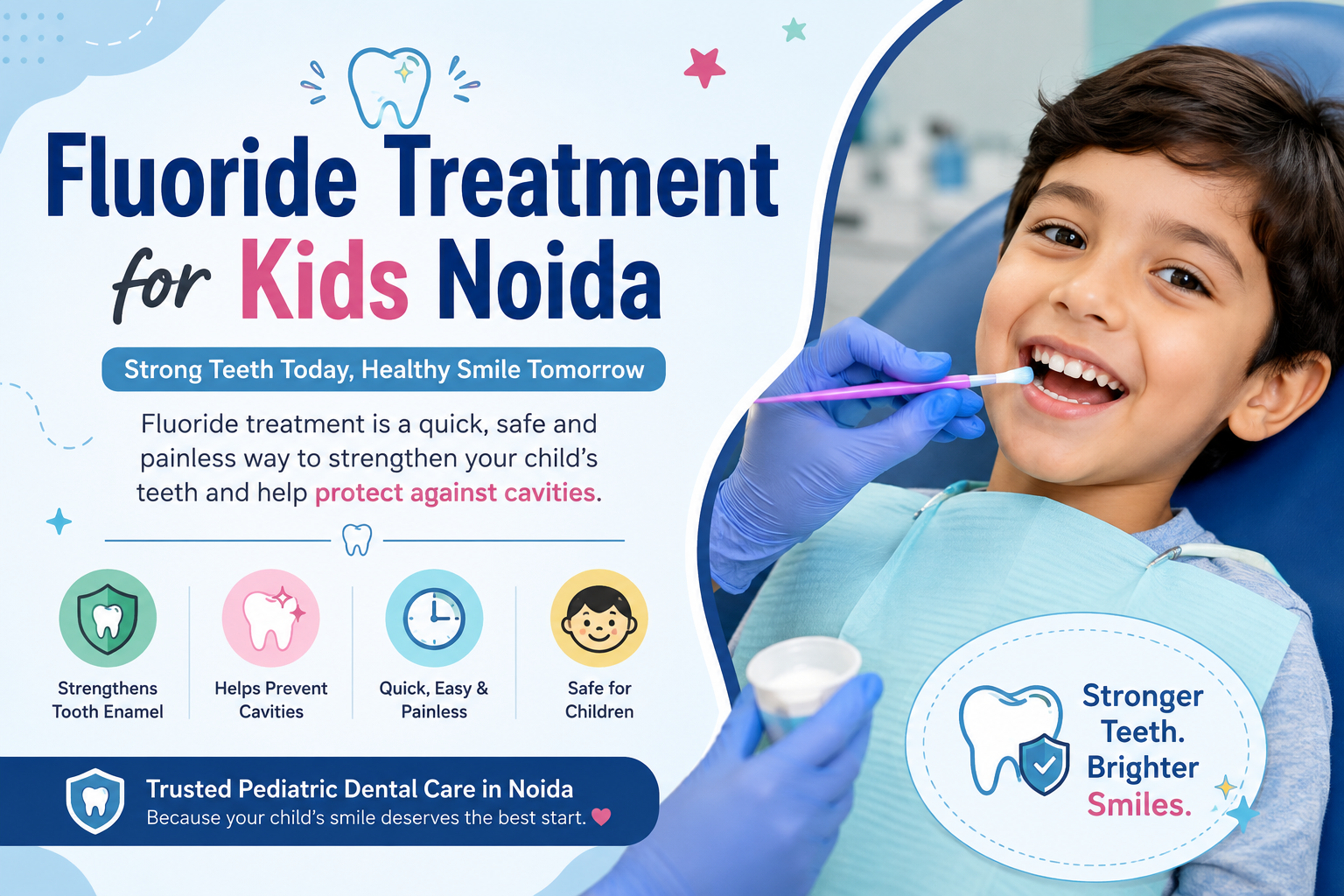
Fluoride treatment is a preventive dental procedure in which a dentist applies a concentrated fluoride product, commonly fluoride varnish, directly to the teeth. The treatment is quick, non-invasive, and particularly useful for children who may have a higher risk of developing cavities. The American Dental Association recommends professionally applied fluoride varnish for children at increased risk of dental caries.
Why Can Kids Benefit From Fluoride?
Regular brushing with fluoride toothpaste is an important part of children’s oral care. However, some children may need additional protection depending on their cavity risk, diet, oral hygiene, and dental history. Professional fluoride treatment can help reduce the risk of tooth decay when included as part of a complete preventive dental care plan.
For younger children, fluoride varnish is generally preferred when professional topical fluoride is indicated because it can be applied in a small amount and adheres to the teeth.
How Often Is Fluoride Treatment Needed?
The frequency depends on the child’s individual cavity risk. Children who are at higher risk may be advised to receive professional fluoride applications at regular intervals, often every 3–6 months, based on the dentist’s assessment.
Parents should also continue daily brushing with an age-appropriate amount of fluoride toothpaste and maintain regular dental check-ups.
Choose Professional Dental Care for Your Child
If you are looking for fluoride treatment for kids in Noida, a pediatric or family dentist can assess your child’s teeth and determine whether fluoride treatment is appropriate. Preventive care at an early age can help build healthier oral hygiene habits and support long-term dental health.