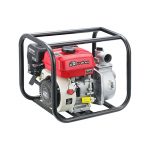
Forced Air-Cooled Gasoline Water Pumps: Design Choices That Keep the Pump Running
Forced air-cooled gasoline water pumps are the workhorse of portable irrigation, construction dewatering, and emergency water transfer. The air-cooled engine removes the radiator, the coolant, and the hoses that a liquid-cooled engine requires, which reduces weight and simplifies maintenance. That simplicity is the product’s advantage, and it is also where the design decisions that determine reliability are concentrated.
The cooling system is the first area where quality shows. The fan, the shroud, and the fins on the cylinder and head must work as a system. A shroud that does not direct air across the full fin area leaves hot spots that shorten the engine’s life. A fan that is undersized for the engine’s output cannot remove heat fast enough during continuous operation. Factories that test the engine under sustained load, rather than only at idle, verify that the cooling system performs in the conditions where the pump is actually used.
Debris is the second area. Agricultural and construction sites produce chaff, dust, and grit that can block the cooling fins and the air filter. A pump that is designed for these environments includes a guard over the fan intake and a pre-filter over the air intake. These features add cost, but they extend the service interval and reduce the risk of overheating. Factories that understand how the pump will be used include them as standard rather than as options.
The pump end of the machine has its own requirements. The impeller and the volute must be matched to the engine’s power so that the pump delivers its rated flow without overloading the engine. A pump that is oversized for the engine stalls under load. One that is undersized does not deliver the flow the user needs. Factories that match the pump end to the engine produce a machine that runs at its design point.
The mechanical seal is a small component that determines whether the pump survives dry running. A seal that is designed for dry running resists the heat that builds up when the pump loses prime. One that is sourced on price fails and allows water into the bearings. Factories that specify the seal material and that test the pump under dry-run conditions protect the user from a failure that is common in the field.
The frame and the handles affect both the pump’s portability and its durability. A frame that is rigid enough to protect the pump during transport and that provides a stable base for operation reduces vibration and extends the life of the fasteners and the seals. Factories that design the frame as part of the machine, rather than as an accessory, produce a pump that is easier to use and longer lasting.
The forced air-cooled gasoline water pump is a mature product, and the differences between a good one and a poor one lie in the details of the cooling, the debris management, the pump-engine match, and the seal. Factories that treat these details as part of the design produce pumps that earn repeat orders.