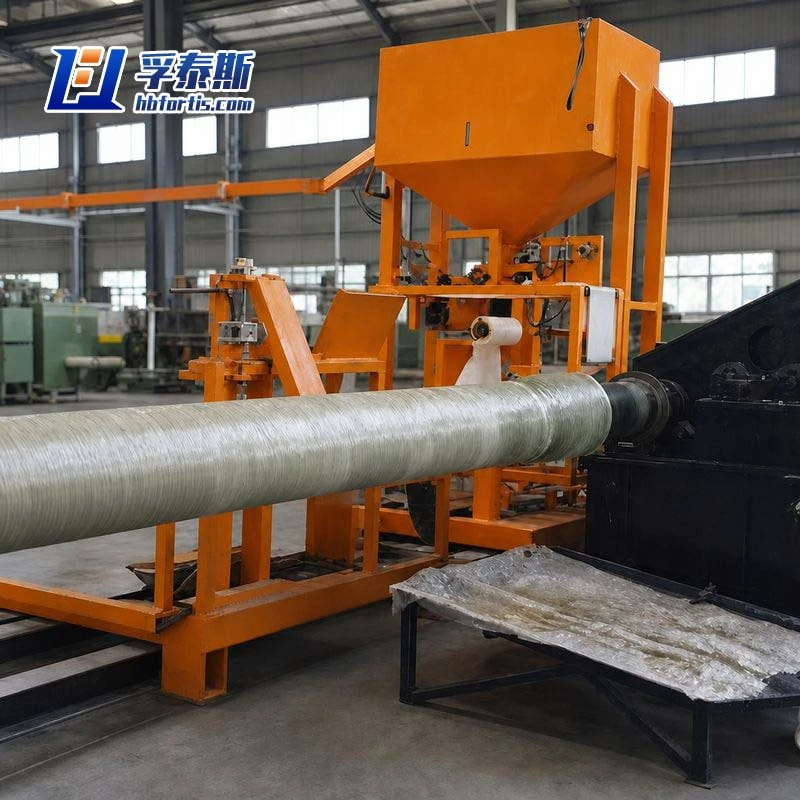
FRP Pultrusion Production Line
FRP Pultrusion Production Line | Fiberglass Pultrusion Machine Supplier
FRP production lines are automated systems for the continuous manufacturing of fiber-reinforced composite products, including pultrusion, filament winding, and MC/BMC compression molding lines. By integrating material handling, molding, curing, post-processing, and intelligent control into a unified system, modern FRP production lines enable efficient, stable, and digitally controlled manufacturing, meeting the industry’s demand for high quality, productivity, and cost efficiency.
Fortis provides professional FRP pultrusion production line solutions for manufacturers producing continuous fiberglass reinforced plastic profiles. Our FRP pultrusion machine is designed for stable production of FRP profiles, rods, tubes, channels, cable tray profiles, grating profiles and other custom composite products with consistent shape and reliable mechanical performance.
As a fiberglass pultrusion machine supplier, Fortis supports equipment configuration, mold matching, production process guidance and customized FRP pultrusion equipment according to product size, profile structure, production capacity and material requirements. Whether you are building a new FRP factory or upgrading an existing FRP production line, we can provide practical equipment solutions for long-term manufacturing.
Fiberglass Pultrusion Machine for Continuous FRP Profile Production
The fiberglass pultrusion machine is used to produce FRP products with continuous length and fixed cross-section. During production, fiberglass roving, mat or surface veil is impregnated with resin, formed through the preforming system, cured through the heated mold and pulled continuously by the traction system.
This process is suitable for producing FRP Profile, FRP Cable Tray, FRP Grating, FRP Pipe components, support structures, insulation parts and industrial composite profiles. Compared with traditional metal materials, pultruded FRP products offer corrosion resistance, lightweight strength, electrical insulation and low maintenance.
Main Components of FRP Pultrusion Equipment
Equipment Section
Function
Creel System
Holds fiberglass roving, mat or other reinforcement materials for continuous feeding
Resin Impregnation System
Ensures fiberglass reinforcement is fully impregnated with resin
Preforming System
Guides and shapes the material before entering the mold
Heating Mold System
Cures the composite profile into the required section shape
Traction Machine
Pulls the profile continuously with stable speed and force
Cutting System
Cuts finished FRP profiles according to required length
Collection Table
Supports finished profile collection and handling
Control System
Helps control heating, traction, cutting and production stability
What Can the FRP Profile Pultrusion Machine Produce?
Fortis FRP profile pultrusion machine can be configured for different composite product applications. The production line can be adjusted according to profile shape, mold design, pulling force, resin system and production speed.
Product Type
Typical Applications
FRP I-beam, channel and angle profile
Industrial structures, platforms, supports and frames
FRP round rod and square tube
Electrical insulation, utility products and structural parts
FRP cable tray profile
Power plants, chemical factories, electrical cable management
FRP grating profile
Walkways, trench covers, platforms and anti-corrosion flooring
FRP pipe and tube profile
Industrial piping, supports and composite structures
Custom FRP profiles
OEM composite products based on drawings or samples
For customers who also need finished composite products, Fortis supplies related FRP products such as FRP Fence, FRP Utility Pole, FRP Drain Channel and FRP Electric Power System.
Customized FRP Pultrusion Production Line
Different FRP products require different equipment configurations. Fortis can recommend a suitable FRP pultrusion production line based on your target product, profile section, raw material system, production capacity and workshop layout.
Customization options include:
· Pulling force and traction structure
· Heating mold size and temperature control
· Resin bath or impregnation system design
· Cutting length and cutting method
· Profile mold matching
· Production speed adjustment
· PLC control system configuration
· Complete line layout according to factory space
If you need to produce FRP cable trays, FRP profiles, FRP tubes or custom fiberglass reinforced plastic products, our team can help match the right FRP pultrusion equipment for your application.
Why Choose Fortis as Your Fiberglass Pultrusion Machine Supplier?
Fortis is not only familiar with FRP equipment, but also understands the production requirements of FRP composite products. This helps us provide more practical support for customers who need both equipment selection and manufacturing guidance.
Fortis Advantage
Value for Customers
FRP product experience
Better understanding of profile applications, material requirements and final product performance
Custom equipment configuration
Machine structure can be matched with product size, shape and production target
Mold and process support
Helps customers improve forming stability and product consistency
Complete production line service
Supports equipment selection, layout, installation and production guidance
Export service capability
Suitable for overseas customers, distributors and new FRP factory projects
Long-term technical support
Supports later adjustment, product development and production improvement
Applications of FRP Pultrusion Production Line
The fiberglass pultrusion machine is suitable for manufacturers serving electrical power, water treatment, construction, transportation, chemical, municipal and industrial markets. Pultruded FRP products are widely used where corrosion resistance, insulation, lightweight structure and long service life are required.
Common application industries include:
· Electrical power and insulation products
· Water treatment and anti-corrosion facilities
· Industrial platforms and walkways
· Cable tray and utility support systems
· Construction reinforcement and structural profiles
· Chemical plant and wastewater treatment equipment
· Custom composite product manufacturing