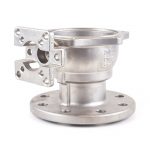
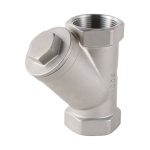
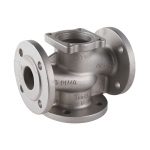
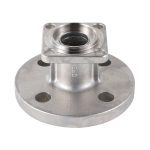
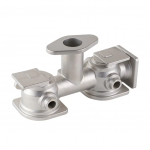
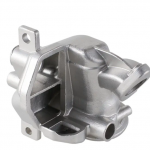
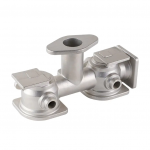
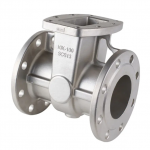
Full Bore Flange Ball Valve Casting Manufacturers Prioritize Unrestricted Flow and Reliable Sealing
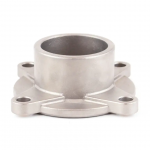
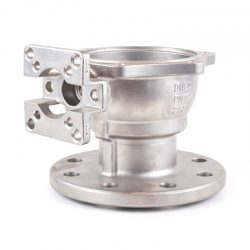
The full bore flange ball valve casting is a component that allows pipeline systems to maintain full flow capacity while providing a reliable shutoff mechanism. Unlike reduced-bore valves that restrict flow and create pressure drops, the full bore design ensures the internal diameter matches the connected pipe, making it suitable for applications where flow efficiency is critical. The flanged ends connect to the pipeline.
Investment casting is commonly used for stainless steel and alloy components. Sand casting is often preferred for larger valves and carbon steel grades. The casting process must produce a dense, defect-free structure, as any porosity or inclusion can lead to leakage or failure under pressure.
The material selection for full bore flange ball valve castings depends on the service conditions. Carbon steel is widely used for general industrial applications. Stainless steel grades such as 316 are specified for corrosive environments. Duplex and super duplex stainless steels are used in offshore and chemical processing applications where high strength and corrosion resistance are required.
The casting design must account for the pressure rating and temperature range. The body wall thickness must provide adequate strength. The flanges must be machined to match the bolting pattern. The casting must be free from defects that could cause leakage.
Quality control is a key focus. Castings are inspected for dimensional accuracy, surface defects, and material composition. Non-destructive testing methods are used to detect internal and surface defects. Pressure testing verifies the casting’s integrity.
The full bore flange ball valve casting remains an important component in the industrial valve market. Its design and performance ensure its continued use. The category is expected to maintain steady demand, supported by the need for reliable flow control in industrial applications.