Generative Engine Optimization Explained for Business Owners
The way people find businesses online is undergoing its most significant shift since the invention of the search engine. For years, the goal was simple: rank high on Google. Today, a new force is reshaping digital discovery—AI-powered search. As a business owner, understanding this shift isn’t just about staying current; it’s about future-proofing your growth strategy.
The Rise of Generative Engine Optimization
Imagine a potential customer asks a question, and instead of receiving a list of blue links, they get a single, synthesized answer pulled from the most trusted sources on the web. That’s the reality of AI search. Tools like ChatGPT, Google’s AI Overviews, and Perplexity are becoming the new front door for customer queries. They don’t just search; they read, synthesize, and deliver answers directly, often without a single click to a website.
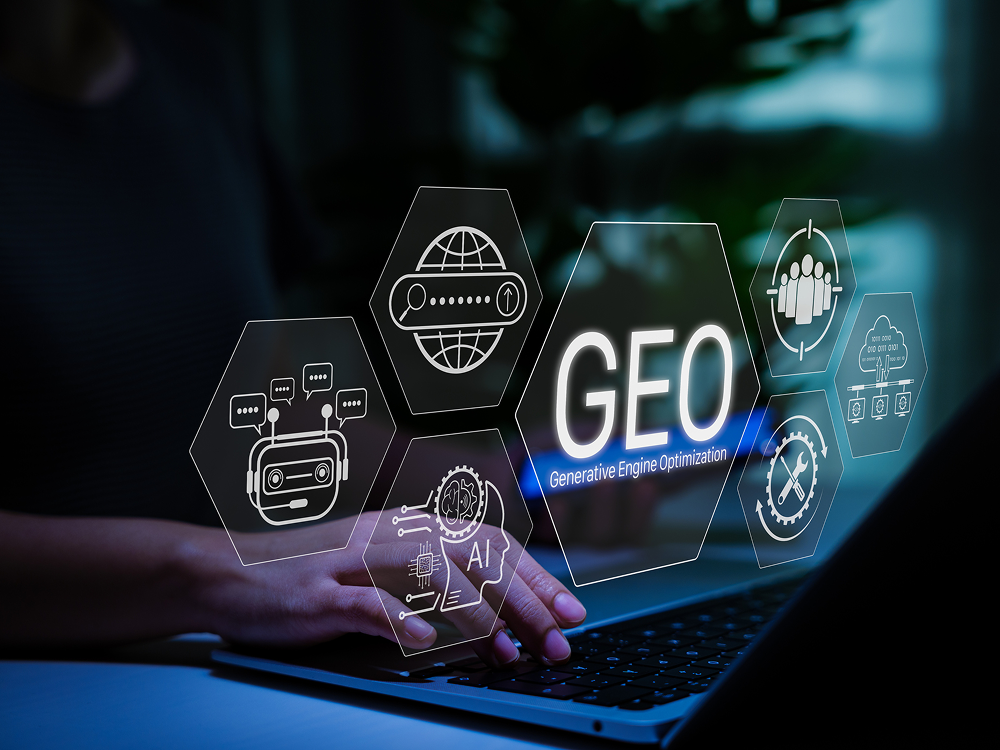
This is where generative engine optimization comes in . It’s the practice of shaping your content so AI models recognize, trust, and cite it. While traditional SEO is about ranking on a results page, GEO is about earning a citation within the AI’s answer itself . This is a critical distinction: you’re shifting from competing for a click to competing to be a primary source of information .
Why GEO Matters for Your Business Right Now
Ignoring this trend is a risk. The data is clear: AI is fundamentally changing search behavior.
Changing User Behavior: Four out of five consumers now rely on AI-generated summaries for at least 40% of their searches . Users are getting answers without visiting websites, causing organic traffic to traditional search results to decline by 15% to 25% .
The Traffic Shift: While AI search reduces overall clicks, the traffic it does send is highly qualified. Studies show that AI-driven traffic converts at roughly 4 to 5 times the rate of standard organic search traffic .
The New High-Value Real Estate: A citation inside an AI answer now carries as much weight as a page-one ranking once did . If your brand isn’t cited, you’re invisible to a growing segment of your audience.
Understanding the Core Difference: GEO vs SEO
While they share the same goal of visibility, the approach to GEO vs SEO is distinct. SEO is about optimizing for the algorithm of a search engine. GEO is about optimizing for the comprehension of an AI .
Objective: SEO aims to rank a webpage on the search engine results page (SERP) and drive clicks. GEO aims to get your content cited directly within an AI-generated answer, even if the user never clicks .
Content Goal: SEO often focuses on keyword density and backlinks. GEO focuses on clarity, structure, and authority, providing direct, concise answers that an AI can easily extract .
Success Metrics: SEO is measured by rankings, click-through rates (CTR), and organic traffic. GEO is measured by “share of model,” citation frequency, and the sentiment within AI summaries .
Target Platforms: SEO targets search engines like Google and Bing. GEO targets large language models (LLMs) and AI platforms like ChatGPT, Google’s AI Overviews, Perplexity, and Gemini .
Your 5-Step GEO Action Plan
Success in the AI era doesn’t require starting from scratch. It builds on SEO fundamentals but adds a new layer of strategy. Here’s how you can start optimizing today.
1. Conduct “Prompt Research”
Traditional keyword research isn’t enough. You need to understand the questions your customers are asking AI tools .
Find the Questions: Don’t just look for keywords; look for complete questions. Mine sources like Google’s “People Also Ask,” Reddit, and Quora for phrases like “How do I…” or “What is the best way to…” .
Reverse-Engineer AI: Enter your target prompts into ChatGPT, Perplexity, and Google’s AI Overviews. See which sources they cite. Study these pages to understand the tone, structure, and clarity that makes them “citation-worthy” . You’ll find that content in “how-to” formats or comparison (“vs”) style often performs very well .
2. Build Citation-Worthy Content
Your goal is to create content so clear and authoritative that AI has no choice but to cite it.
Use the Inverted Pyramid: Structure your key sections by stating the main answer first, followed by supporting details . For example, directly state, “The best way to reduce customer acquisition costs is through targeted content marketing,” then explain why.
Cite Your Sources: AI models trust content that is backed by evidence. Including statistics, quotes from experts, and links to credible, original sources can increase your visibility in AI answers by up to 40% .
Add a Dedicated FAQ Section: AI models love question-and-answer formats. A well-structured FAQ section creates dependable “extraction targets” for AI to pull information from .
Focus on a Structured Content Format: Think lists, tables, and bullet points . For instance, a list like “5 Key Pillars of an Effective Growth Strategy” is easier for AI to parse than a long, dense paragraph.
3. Structure Your Content for AI Extraction
If an AI can’t easily understand your page, it can’t cite it.
Write Clear, Descriptive Headings: A heading like “What is a Go-To-Market Strategy?” is more effective for AI than a generic one like “Strategy & Planning” .
Keep Paragraphs Short and Focused: Aim for 2-4 sentences per paragraph. Each paragraph should cover one clear idea .
Use Simple Language: AI is trained on natural, conversational language. Forceful keyword repetition can actually hurt your performance . Write like you’re explaining your business to a smart colleague, not trying to game an algorithm.
4. Build Your Technical Foundation
Technical SEO is the eligibility layer for GEO. If your site is slow, unstable, or hard for AI crawlers to parse, you won’t be cited .
Optimize for Core Web Vitals: Page speed and mobile-friendliness are crucial for both search engines and AI crawlers .
Implement Structured Data (Schema Markup): Use schema to tell search engines exactly what your business is. Add Article schema for blog posts, Product schema for your products, and FAQPage schema for your FAQs. This disambiguates your brand and helps AI connect the dots .
Ensure Crawlability: Don’t block AI bots from accessing your content. Ensure your site architecture is logical and easy for both search engines and AI models to navigate .
5. Be Consistent and Measure Progress
GEO is a long-term game, not a quick fix. Your visibility will improve with consistent effort.
Update Your Core Content Frequently: AI models prefer “fresh” content. Regularly update your cornerstone pages (like your “About Us” or main service pages) with new statistics, case studies, and relevant examples . Add a “Last Updated” timestamp to signal freshness .
Monitor Your “Share of Model”: Regularly run your key prompts in AI tools to see if and how your brand is mentioned. Keep a spreadsheet to track your progress over time .
How a Full-Service Partner Can Accelerate Your Journey
Mastering both SEO and GEO requires a strategic blend of technical expertise, compelling content, and a data-driven mindset. As a leading digital marketing agency in Navi Mumbai, IQRA Digital Solutions specializes in exactly this. Our team acts as your long-term growth partner, equipped with the knowledge to implement these strategies effectively. By combining industry expertise with performance-driven tactics like AI-powered SEO tools and automated ecommerce funnels, we ensure your marketing budget becomes a powerful investment in your business growth. We help you build the profitable systems and data-driven insights necessary to succeed in this new era, enabling you to scale your brand the right way.
The Bottom Line
The shift from traditional search to AI-driven answers is profound, but it’s not a reason to panic. It’s an opportunity to build a stronger, more resilient brand. By focusing on clarity, authority, and structure in your content, you can ensure your business is not just found, but trusted as a primary source in the age of AI.