How do skilled craftsmen utilize plastering trowels to achieve smooth finishes?
Types of Plastering Trowels for Different Tasks:
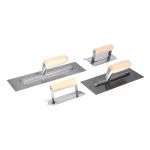
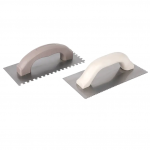
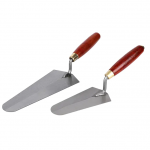
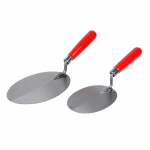
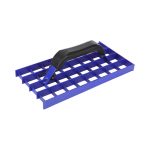
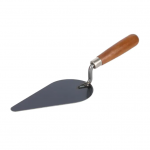
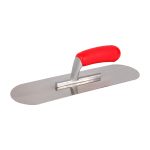
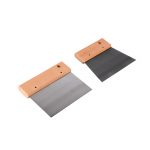
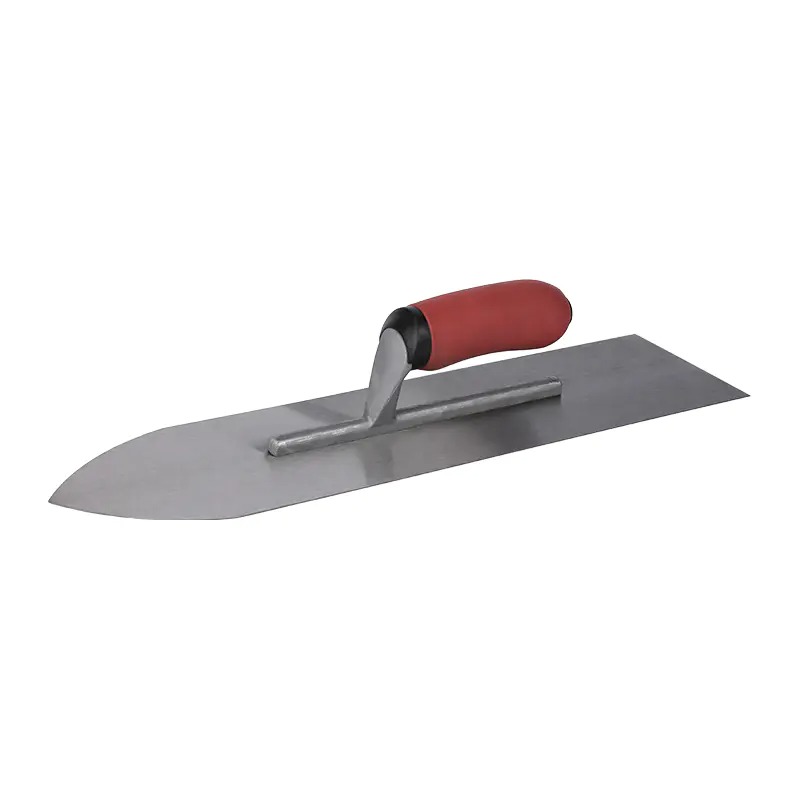
Plastering trowels come in various types, each designed for specific tasks and finishes. Finishing trowels, with their flat and smooth blades, are ideal for achieving fine, polished surfaces. Corner trowels, featuring angled edges, assist in creating sharp, clean corners. Notched trowels, with serrated edges, are used for applying adhesive or textured finishes. Understanding the specific task and desired finish is essential for selecting the appropriate type of plastering trowel.
Proper Technique and Angle of Application:
Craftsman skillfully manipulate plastering trowels at different angles to achieve specific results. The angle of application, pressure exerted, and direction of the stroke influence the texture and appearance of the finished surface. Craftsmen often employ overlapping strokes and varying pressure to distribute the plaster evenly and eliminate air bubbles, ensuring a flawless finish.
Achieving a Polished Finish with Burnishing:
Burnishing is a technique employed by craftsmen to achieve a polished finish on plastered surfaces. After the initial application and drying, craftsmen use specialized steel trowels to polish the surface, compressing the plaster and creating a smooth, shiny finish. Burnishing not only enhances the aesthetics but also improves the durability of the plastered surface, making it resistant to wear and damage.
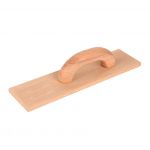
SIZE
16″x4-1/2”
MEAS(CM)
59x42x33
PACKING QTY(PCS)
6/36
G.W/N.W(KG)
19/17
ITEM NO
1112B