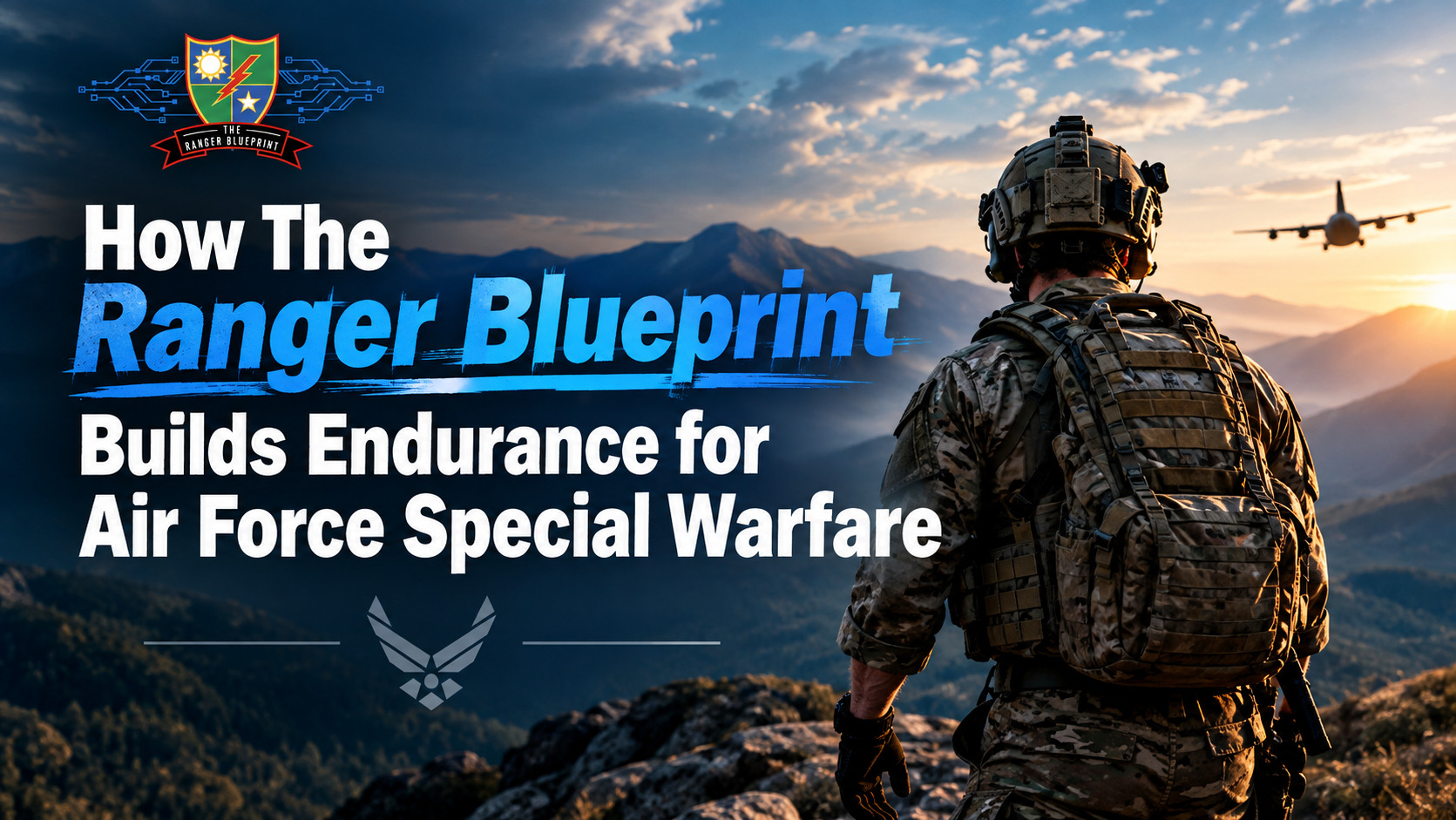
How The Ranger Blueprint Builds Endurance for Air Force Special Warfare
Preparing for Air Force Special Warfare requires more than being physically fit. Candidates need the ability to keep moving, working, and making good decisions when fatigue starts to build. Endurance is a major part of that preparation because demanding training can test both physical capacity and mental discipline. The Ranger Blueprint focuses on building the habits and physical foundation candidates need to handle sustained effort.
Understanding Endurance for Air Force Special Warfare
Endurance is the ability to maintain useful performance over time without losing control of technique, pace, or focus. For Air Force Special Warfare candidates, this can involve running, swimming, calisthenics, loaded movement, and other demanding activities.
The goal is not simply to train harder every day. Effective endurance development requires structured progression, appropriate recovery, and consistency.
Key areas include:
Aerobic conditioning for sustained activity
Running capacity and pacing
Swimming and water-based conditioning
Muscular endurance for repeated movements
Recovery between demanding training sessions
A Structured Approach to Endurance
The Ranger Blueprint uses a structured approach rather than treating every workout as a test. Candidates need to understand the difference between productive training and unnecessary fatigue.
A strong endurance program should gradually increase the body’s ability to handle workload. This allows candidates to develop capacity while reducing the risk of constantly training at maximum intensity.
Training can focus on:
Building an aerobic base before increasing intensity
Improving work capacity through progressive sessions
Practicing consistent pacing instead of starting too fast
Combining endurance work with strength and mobility
Tracking progress over time
This approach helps turn endurance from a short-term fitness goal into a dependable physical skill.
Training for More Than Physical Capacity
Air Force Special Warfare preparation also requires mental resilience. Long and difficult sessions can create discomfort, fatigue, and frustration. Candidates must learn to remain disciplined when training becomes uncomfortable.
The Ranger Blueprint emphasizes habits that support performance under pressure. Showing up consistently, following a training plan, managing recovery, and staying focused are all part of becoming better prepared.
Endurance development can therefore teach valuable habits such as:
Staying composed when tired
Maintaining technique under fatigue
Following instructions and training targets
Remaining consistent when motivation is low
Understanding when recovery is necessary
Why Recovery Matters
Endurance does not improve simply because training volume continues to increase. Recovery gives the body an opportunity to adapt to training stress.
Candidates should pay attention to sleep, nutrition, mobility, hydration, and appropriate rest. A well-planned program balances demanding sessions with enough recovery to support continued progress.
The Ranger Blueprint treats recovery as part of preparation rather than an interruption to training. This helps candidates build sustainable habits instead of relying on repeated exhaustion.
Building Long-Term Special Warfare Readiness
There is no single workout that creates Air Force Special Warfare readiness. Endurance develops through repeated, purposeful training over time.
The Ranger Blueprint helps candidates approach preparation with greater structure and consistency. The focus is on developing physical capacity while also building the discipline required to use that capacity when conditions become difficult.
Candidates should remember that preparation is a process. Progress comes from training consistently, evaluating performance honestly, recovering properly, and gradually becoming more capable.
Conclusion
Endurance is one of the foundations of effective Air Force Special Warfare preparation. Candidates need more than the ability to complete one hard workout; they need the capacity to perform repeatedly while managing fatigue and maintaining focus.
The Ranger Blueprint supports this process through structured training, progressive development, recovery, and disciplined habits. Building endurance in this way can help candidates approach demanding preparation with greater confidence and a stronger physical foundation.
FAQs
What type of endurance is important for Air Force Special Warfare?
Both cardiovascular and muscular endurance are important. Candidates may need sustained running, swimming, repeated calisthenics, and other forms of prolonged physical effort.
Is endurance training only about running?
No. Running is important, but endurance can also involve swimming, calisthenics, strength-endurance work, and other conditioning methods.
Why is recovery important when building endurance?
Recovery allows the body to adapt to training stress. Without appropriate recovery, excessive fatigue can interfere with performance and long-term progress.
Can The Ranger Blueprint replace official military training?
No. A preparation program can help candidates develop fitness and habits before selection, but it does not replace official military training, standards, or instruction.