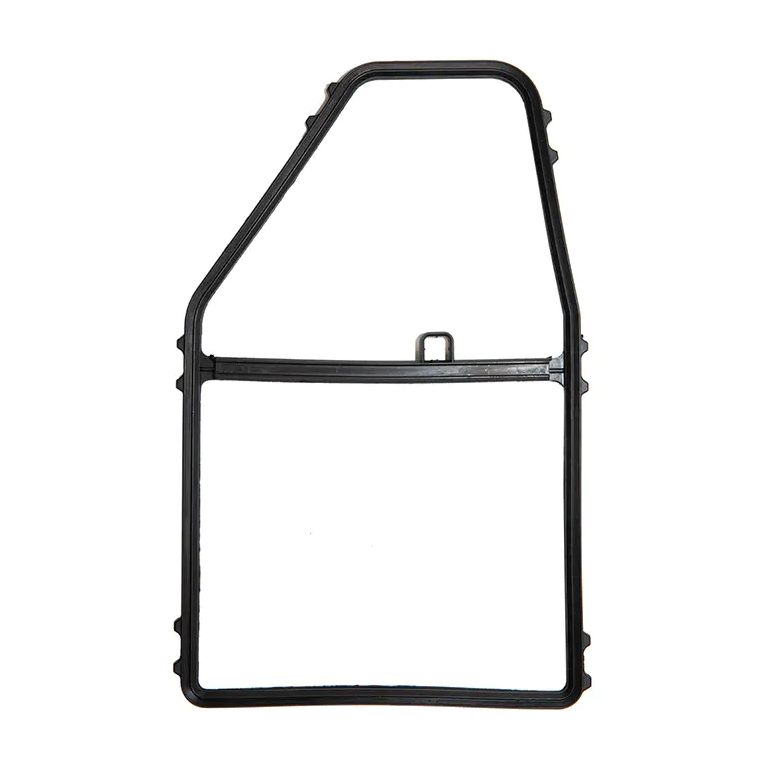
How to Evaluate a Special Shape Seal Rings Make
What design and prototyping capabilities define a specialist maker
A true Special Shape Seal Rings Maker operates with advanced engineering and prototyping services. This begins with the ability to work from a client’s 2D drawing, 3D CAD model, or even a physical sample to reverse-engineer a seal. They utilize software for finite element analysis to simulate seal performance under pressure, temperature, and dynamic motion. Rapid prototyping methods, such as CNC machining of sample rings from a solid block of material or 3D printing with advanced polymers, allow for form-and-fit validation before committing to production tooling. This iterative design phase is critical for complex cross-sections.
How are materials selected and compounded for unique applications
Material science is foundational. A proficient Special Shape Seal Rings Maker offers a wide portfolio beyond standard nitrile or fluorocarbon rubber. This includes high-performance materials like hydrogenated nitrile, ethylene acrylic, fluorosilicone, and perfluoroelastomers for extreme chemical, thermal, or pressure conditions. For static seals in heavy machinery, they may work with engineered thermoplastics or metal-elastomer composites. Their expertise lies in recommending and sourcing the correct base polymer and compounding it with specific fillers, plasticizers, and curing agents to achieve the exact hardness, compression set, and chemical resistance required.
What precision molding and machining processes are employed
Manufacturing depends on the material and complexity. For elastomers, high-precision compression, transfer, or injection molding is used. This requires the maker to design and fabricate intricate, multi-part molds capable of forming undercuts, internal voids, or complex lips. For PTFE or engineered plastics, CNC machining from extruded or molded blanks is standard to achieve ultra-precise dimensions and surface finishes. A maker’s capability is judged by their toolroom’s ability to produce these precision molds and fixtures in-house and their process control during curing and post-curing.
How is quality control implemented for non-standard geometries
Quality assurance for custom shapes is rigorous. A reliable Special Shape Seal Rings Maker employs a combination of measurement techniques. This includes laser scanning and optical comparators to verify the entire profile against the CAD model, durometer testing for hardness, and specialized fixtures to test functionality, such as leak testing under simulated pressure. For critical applications, material batch testing for chemical composition and physical properties is standard. They provide comprehensive first-article inspection reports and maintain statistical process control for production runs to ensure every batch meets the exact, often non-standard, specification.



















































![Top 10 Armoured Cable Manufacturers in Australia [2026 Edition]](https://manufacturers.network/btabcloud/uploads/2026/07/steel-wire-armoured-cable-17848006138c4lp-250x188.jpg)

