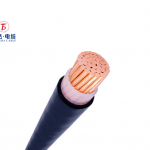
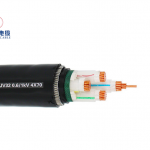
IEC Standards Cable
https://www.tongda-wirecable.com/cable-catalog/iec-standards-cable.html
In a globalized power system, IEC (International Electrotechnical Commission) standard cables serve as a uniform technical specification that ensures the safety, reliability and interoperability of cable products in different countries and regions. Whether you are a power engineer, procurement manager, or project contractor, understanding the classification, application, and selection points of IEC standard cables is crucial to the success of your project. In this article, we’ll take you through the nuts and bolts of IEC cables to help you make informed decisions on your project.
What is IEC standard cable?
IEC standard cables are cable products that comply with the technical specifications set by the International Electrotechnical Commission (IEC). These standards cover all aspects of cable design, manufacturing, testing and application, and are designed to ensure the safety and consistent performance of cables worldwide. By following IEC standards, manufacturers can produce high-quality cable products that meet the demands of the international market, while users can select the type of cable that is suitable for their particular application according to the standards.
The main categories of IEC standard cables
1. Low-voltage cables (rated voltage ≤ 1kV)
IEC 60227: Polyvinyl chloride (PVC) insulated cables for fixed wiring in domestic, commercial and industrial buildings.
IEC 60245: Rubber insulated cables, widely used in factories and heavy duty working environments with high abrasion resistance and flexibility.
2. Medium voltage cables (1kV < rated voltage ≤ 30kV)
IEC 60502: Medium-voltage cables for power distribution systems, mainly for fixed installations such as power grids or industrial facilities.
3. High voltage cables (30kV < rated voltage ≤ 150kV)
IEC 60840: Cables for high-voltage power transmission, suitable for buried or overhead lines, widely used in power grid trunk lines.
4. Special application cables
IEC 60092: Cables for marine electrical installations, suitable for harsh environments such as oceans and offshore platforms.
IEC 60702: Mineral insulated cables, suitable for high temperature or fire requirements of high places.
Key IEC cable standards in detail
IEC 60228: Insulated cable conductors
This standard defines the material characteristics, dimensions and electrical properties of conductors, including electrical conductivity, resistance and flexibility. By establishing harmonized conductor requirements, IEC 60228 ensures the consistency and reliability of cables in different installation environments.
IEC 60331: Testing of cables under fire conditions
IEC 60331 specifies test procedures for assessing the fire resistance of cables under fire conditions, ensuring that cables maintain their integrity and functionality in a fire, thus providing increased safety in fire environments.
IEC 60332: Testing of cables under fire conditions
This standard specifies test methods for assessing the flammability, flame propagation and smoke generation characteristics of cables under fire conditions, ensuring that cables meet stringent safety requirements in a fire.
IEC 60502: Medium voltage cables
IEC 60502 covers the construction requirements, dimensions and test methods for cables and their accessories with rated voltages from 1 kV to 30 kV, widely used in fixed installation power distribution systems.
IEC 60754: Acid gas test during combustion
This standard evaluates the amount of acid gases released when a cable burns and is used to assess the toxicity and corrosiveness of cables in a fire to improve the safety of personnel and the protection of equipment.
IEC 61034: Smoke density measurement
IEC 61034 specifies the measurement of smoke density when cables are burned under defined conditions for assessing the visibility and safety of cables in a fire.