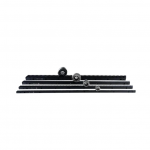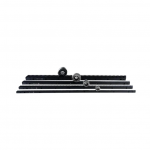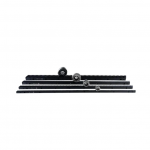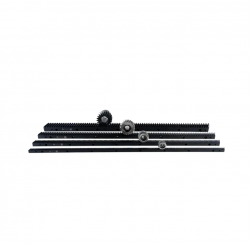
Installation Differences: Helical vs. Straight Ground Racks
Accounting for the Helix Angle in System Setup
The fundamental difference in installation stems from the angled teeth of the helical design. While a straight ground gear rack requires alignment primarily for parallelism and straightness, a helical ground rack adds the critical dimension of angular alignment relative to the driving pinion’s axis. This imposes specific requirements on mounting, shimming, and the initial meshing process that a professional helical ground rack manufacturer must guide to ensure optimal performance and longevity.
Critical Alignment: The Pinion Axis and Rack Helix Angle
For a helical rack to function correctly, the axis of the pinion must be perfectly parallel to the plane defined by the rack’s helix angle. If installing a straight rack is like aligning two straight edges, installing a helical rack is like aligning a straight edge with a precisely angled reference. Misalignment here causes uneven tooth contact, increased noise, premature wear, and reduced load capacity. The installation team must carefully measure and shim the rack or the pinion mounting to achieve this angular parallelism, a step not required with a straight rack.
Managing Thrust Forces and Mounting Rigidity
A helical gear mesh generates axial thrust forces along the axis of the pinion. This is a force not present (or minimal) in a straight spur gear mesh. Therefore, the mounting for both the helical ground rack and the pinion bearing housing must be designed to resist these thrust loads. The helical ground rack manufacturer often provides specifications for the required mounting stiffness and may offer brackets or subplates with thrust faces. The installer must ensure the entire assembly is secured against this pushing force to prevent creep or deflection during operation.