Interactive Sports: Transforming Fitness, Entertainment, and Athletic Training
Interactive Sports: Transforming Fitness, Entertainment, and Athletic Training
Introduction
Interactive sports are changing the way people experience physical activity by combining technology with traditional sports and fitness. Using advanced technologies such as motion sensors, projection mapping, artificial intelligence (AI), virtual reality (VR), and augmented reality (AR), interactive sports create engaging environments where players can compete, exercise, and learn in exciting new ways. Whether in schools, fitness centers, entertainment venues, shopping malls, or sports training facilities, interactive sports encourage people of all ages to stay active while having fun.
As technology continues to evolve, interactive sports are becoming more popular because they offer immersive experiences that improve physical health, teamwork, coordination, and cognitive skills.
What Are Interactive Sports?
Interactive sports are technology-enhanced physical activities that respond to a player’s movements in real time. Unlike traditional sports, these systems use digital displays, projectors, sensors, cameras, or wearable devices to create interactive challenges and games.
Players can kick, jump, throw, run, or move across an interactive surface while the system instantly reacts with animations, sounds, scores, and changing game environments. This combination of physical movement and digital interaction creates an engaging experience that motivates participants to stay active longer.
How Interactive Sports Work
Interactive sports systems use several advanced technologies to deliver immersive gameplay. Motion sensors and infrared cameras detect player movements, while projectors or LED displays present interactive graphics on floors, walls, or large screens.
Artificial intelligence analyzes player actions and adjusts game difficulty based on performance. Some systems also include touch-sensitive surfaces, wearable fitness trackers, and cloud-based analytics that allow coaches and trainers to monitor progress.
The result is a highly responsive sports environment that combines physical exercise with digital entertainment.
Benefits of Interactive Sports
Encourages Physical Activity
One of the biggest advantages of interactive sports is that they motivate people to exercise regularly. The gaming experience makes workouts enjoyable, encouraging children and adults to move more without feeling like they are performing traditional exercise routines.
Improves Athletic Performance
Athletes use interactive sports technology to improve speed, agility, reaction time, balance, and coordination. Coaches can create customized drills that provide instant feedback, helping players identify strengths and areas for improvement.
Supports Education
Schools increasingly use interactive sports to make physical education classes more engaging. Students participate enthusiastically because interactive games combine learning with entertainment, promoting teamwork, healthy competition, and problem-solving skills.
Suitable for All Ages
Interactive sports are designed for children, teenagers, adults, and seniors. The games can be customized according to age, fitness level, and physical ability, making them accessible to a wide range of users.
Real-Time Performance Feedback
Modern systems record player statistics, including scores, reaction times, movement accuracy, and exercise duration. This valuable data helps users monitor their progress and achieve fitness goals more effectively.
Popular Interactive Sports Applications
Interactive sports technology is used in various industries and environments.
Schools and Educational Institutions
Schools use interactive sports equipment to create engaging physical education classes that encourage teamwork, fitness, and healthy lifestyles.
Fitness Centers
Gyms incorporate interactive sports into training programs, offering members exciting alternatives to traditional cardio workouts.
Sports Academies
Professional coaches use interactive systems for agility drills, reaction training, and performance analysis to help athletes improve their competitive skills.
Family Entertainment Centers
Interactive sports attractions have become popular in entertainment venues where families can enjoy active gaming experiences together.
Shopping Malls
Retail centers use interactive sports installations to attract visitors by offering unique recreational experiences that increase customer engagement.
Types of Interactive Sports
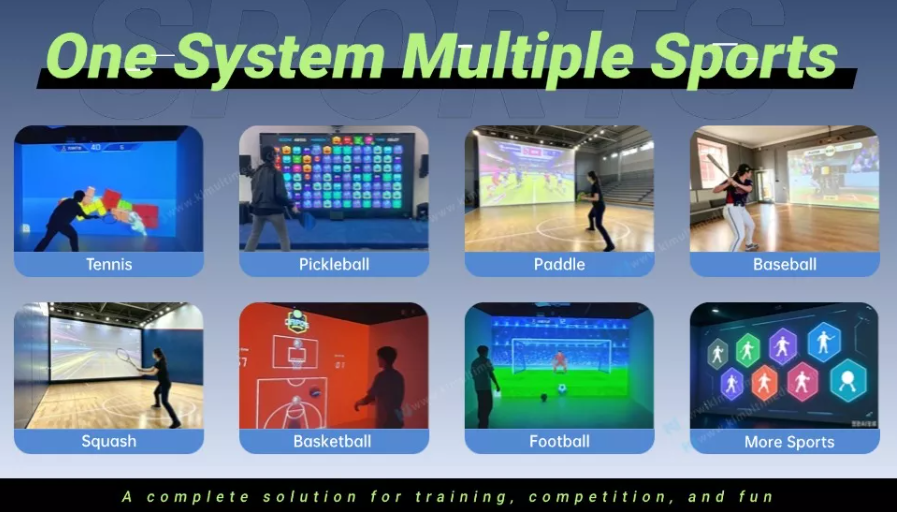
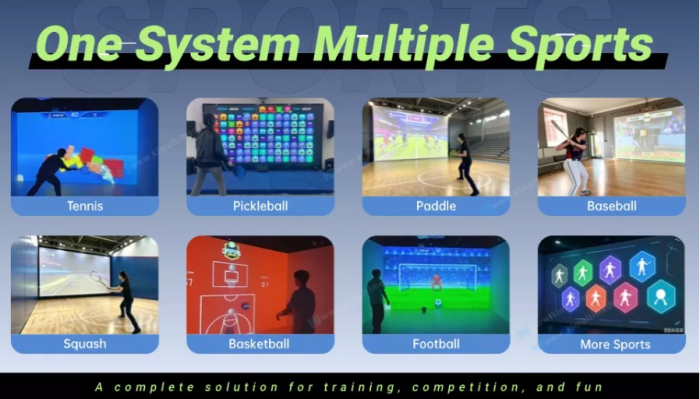
Several innovative interactive sports experiences are available today, including:
- Interactive football games
- Interactive basketball training
- Interactive soccer walls
- Interactive climbing walls
- Interactive floor games
- Interactive projection sports
- Virtual reality sports simulators
- Augmented reality fitness games
- Interactive cycling experiences
- Smart boxing trainers
Each system combines physical activity with engaging digital content to create memorable experiences.
Technologies Behind Interactive Sports
Interactive sports rely on several cutting-edge technologies, including:
- Motion tracking cameras
- Artificial intelligence
- Projection mapping
- Touch-sensitive displays
- Infrared sensors
- LED video walls
- Virtual reality headsets
- Augmented reality applications
- Cloud-based performance analytics
- Smart wearable devices
Together, these technologies create realistic and responsive gaming environments that enhance both entertainment and athletic development.
Future of Interactive Sports
The future of interactive sports looks incredibly promising. Artificial intelligence will continue to personalize training sessions, while virtual and augmented reality technologies will create even more immersive experiences.
Wearable fitness devices will integrate seamlessly with interactive sports systems, allowing users to monitor heart rate, calories burned, movement patterns, and recovery performance in real time. Cloud-based platforms will also enable coaches to analyze athlete performance remotely.
As smart cities, digital schools, and connected fitness facilities continue to grow, interactive sports will become an essential part of education, recreation, and professional athletic training.
Choosing the Right Interactive Sports System
When selecting an interactive sports solution, consider several important factors:
- Installation space
- User age group
- Available game library
- Motion tracking accuracy
- Software updates
- Safety features
- Maintenance requirements
- Technical support
- Customization options
- Budget
Choosing a reliable system ensures long-term performance and maximum user engagement.
Conclusion
Interactive sports are revolutionizing the world of fitness, education, and entertainment by combining physical activity with advanced digital technology. These innovative systems make exercise more enjoyable, improve athletic performance, encourage teamwork, and provide valuable performance insights through real-time analytics.
From schools and sports academies to fitness centers and entertainment venues, interactive sports continue to transform how people learn, train, and play. As technologies such as AI, virtual reality, and motion tracking become more advanced, interactive sports will play an even greater role in promoting healthier lifestyles and creating unforgettable active experiences for people of all ages.