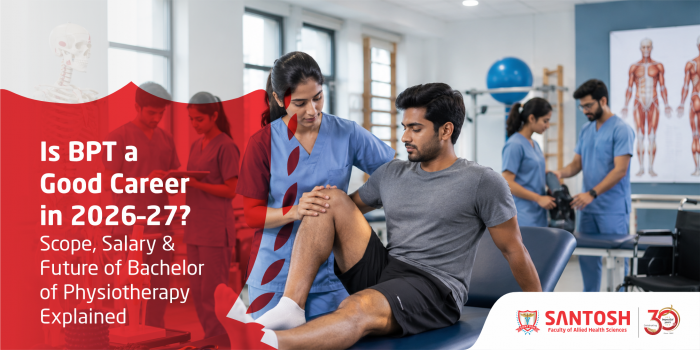
Is BPT a Good Career in 2026–27
1. What is Bachelor of Physiotherapy (BPT)?
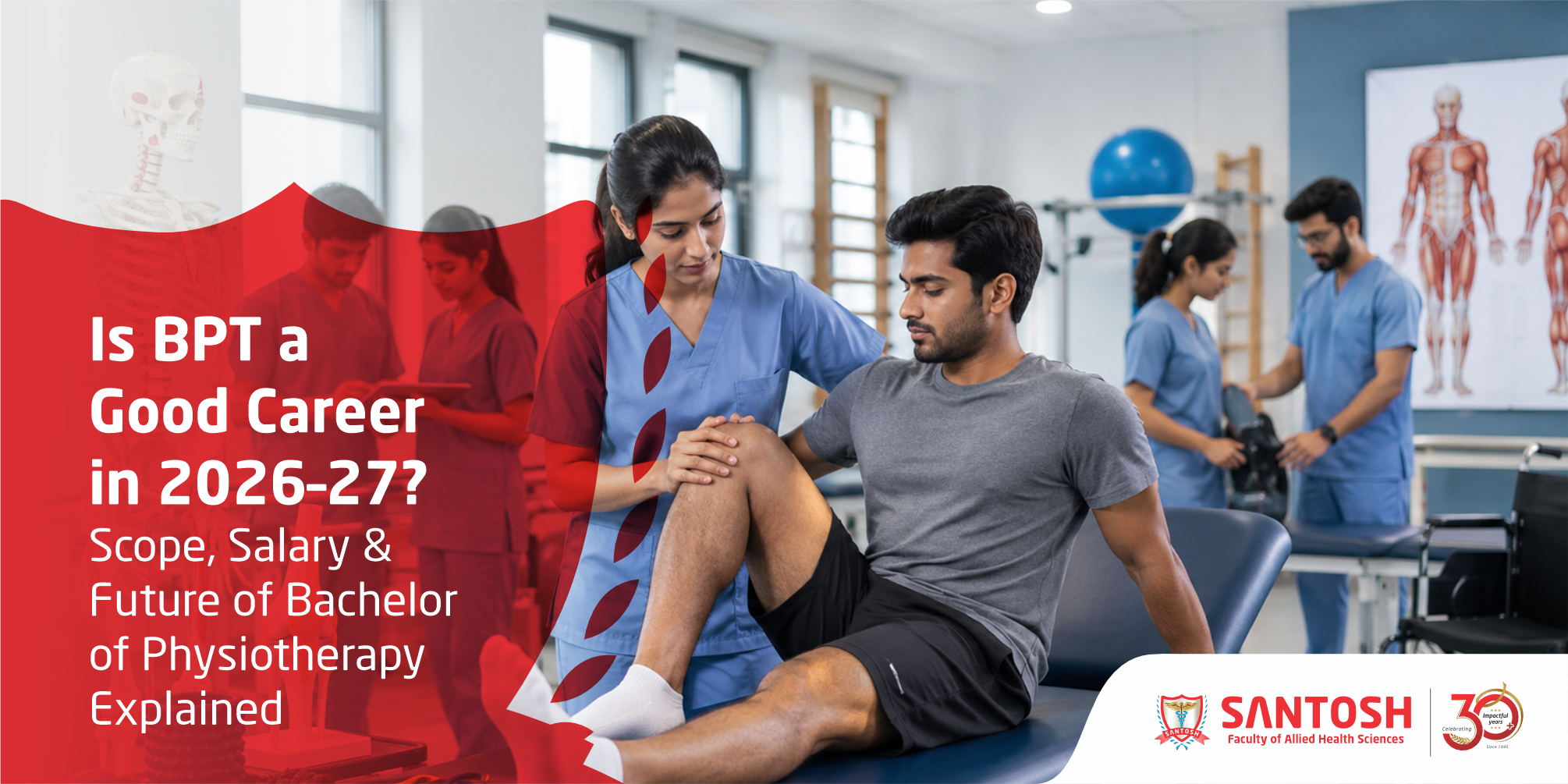
Every hospital ward, rehabilitation centre and sports facility needs someone who understands how the human body moves — and more importantly, how to restore that movement when injury, illness or surgery takes it away. That someone is a physiotherapist, and the Bachelor of Physiotherapy (BPT) is the undergraduate programme that trains them to do exactly that.
Physiotherapy is far more than stretching exercises and heat packs. It is a science-backed healthcare discipline that addresses musculoskeletal injuries, neurological conditions, cardiopulmonary disorders, paediatric development challenges and post-surgical recovery — using movement, manual therapy, electrotherapy and evidence-based rehabilitation protocols. In India and globally, physiotherapy is now recognised as an independent clinical profession with growing demand across hospitals, fitness centres, geriatric care units and community health settings.
If you are a science student after Class 12, searching for physiotherapy colleges in Ghaziabad or allied health courses in Delhi NCR, the BPT programme at Santosh College of Physiotherapy, Santosh Deemed to be University, could be the career foundation you have been looking for.
2. Why Pursue BPT in 2026–27?
India’s rehabilitation and allied healthcare sector is undergoing a structural transformation. From the expansion of NCAHP-regulated programmes to a surge in sports medicine facilities, elder care homes and multi-specialty hospitals — trained physiotherapists are in high demand across every tier of the healthcare system. Here is why BPT makes strong career sense right now:
- Nationally recognised under NCAHP: The BPT programme is aligned with the National Commission for Allied and Healthcare Professions (NCAHP) curriculum and regulatory framework, ensuring your qualification is standardised and nationally valid.
- No NEET required: Unlike MBBS or BDS, BPT admission does not require NEET, making it a highly accessible healthcare career path for science students.
- Rising demand for physiotherapists: India’s ageing population, growing burden of lifestyle disorders and expansion of sports infrastructure are all driving up the need for skilled physiotherapy professionals.
- Diverse practice settings: BPT graduates are employed in hospitals, rehabilitation centres, sports teams, corporate wellness programmes, schools for children with special needs and independent clinical practice.
- Gateway to specialisation: After BPT, graduates can pursue MPT (Master of Physiotherapy) in specialisations like Musculoskeletal, Neurological, or Cardiopulmonary Physiotherapy — opening doors to advanced clinical and academic careers.
3. Course Overview at a Glance
Course Detail
Information
Course Name
Bachelor of Physiotherapy (BPT)
Offered By
Santosh College of Physiotherapy, Santosh Deemed to be University, Ghaziabad
Programme Level
Undergraduate (Allied Health Sciences)
Duration
5 Years (4 years academics + 1 year compulsory internship)
Regulatory Body
National Commission for Allied and Healthcare Professions (NCAHP)
Affiliation
Atal Bihari Vajpayee Medical University (ABVMU), Lucknow
Eligibility
10+2 with Physics, Chemistry, Biology & English; prescribed minimum qualifying marks
Annual Fee
Rs. 4,06,000/-
Mode of Study
Regular / Full-Time
Internship
1 year — hospitals, rehabilitation centres, community health settings, specialty units
Admission Mode
Merit-based + Counselling / Entrance as per ABVMU notifications
Admission Portal
IAP Recognition
5-Star Rated Certified College by Indian Association of Physiotherapists
Career Roles
Clinical Physiotherapist, Sports Physio, Rehab Specialist, Neuro Physio, Community Physio
4. Eligibility Criteria
Eligibility Parameter
Requirement
Minimum Education
Passed 10+2 or equivalent from a recognised board
Compulsory Subjects
Physics, Chemistry, Biology (PCB) and English
Minimum Marks
As prescribed by NCAHP and ABVMU guidelines for the relevant academic year
NEET Requirement
Not required for BPT admission
Relaxation
As per applicable Government norms for reserved categories
Note: Eligibility criteria are as per the latest NCAHP and ABVMU guidelines. Candidates are advised to verify current requirements at www.abvmuup.edu.in at the time of application.
5. BPT Course Curriculum — Year-by-Year Breakdown
The BPT curriculum at Santosh College of Physiotherapy is structured across four academic years followed by a one-year internship. Each year is designed to progressively build clinical depth, reasoning, and professional readiness.
YearFocus Areas1stBuilds a strong foundation in basic medical sciences including anatomy, physiology, biomechanics, kinesiology, and professional orientation.2ndDevelops core physiotherapy skills in exercise therapy, electrotherapy, pathology, pharmacology basics, and clinical assessment techniques.3rdTrains students in orthopedic, neurological, and cardiopulmonary physiotherapy with supervised clinical exposure.4thFocuses on advanced clinical practice, community physiotherapy, sports rehabilitation, research exposure, and professional readiness.InternshipExtensive hands-on clinical training across hospitals, rehabilitation centers, community health settings, and specialty units to build independent clinical competence.
6. What Makes Santosh College of Physiotherapy the Right Choice?
Located in Ghaziabad, at the centre of the Delhi NCR healthcare corridor, Santosh College of Physiotherapy is part of Santosh Deemed to be University — a NAAC-accredited institution with over 30 years of healthcare education experience. For students searching for the best physiotherapy college in Delhi NCR or top BPT colleges in Uttar Pradesh, here is what sets Santosh apart:
Integrated 900+ Bedded Teaching Hospital
Physiotherapy education here is never theoretical-only. With a 900+ bedded teaching hospital at the centre of the campus, BPT students engage with real patients from the very first year. This clinical depth is rarely available at standalone physiotherapy institutes.
IAP 5-Star Rated College
Santosh College of Physiotherapy holds a 5-Star rating from the Indian Association of Physiotherapists (IAP) — a recognition of its standards in academic quality, clinical training infrastructure and student outcomes. Very few physiotherapy colleges in the NCR region hold this distinction.
NCAHP-Aligned Curriculum
The BPT programme strictly follows the curriculum and regulatory framework prescribed by the National Commission for Allied and Healthcare Professions (NCAHP). Students graduate with a nationally recognised qualification that meets current professional standards.
Advanced Laboratories and Simulation Infrastructure
The department is equipped with modern rehabilitation equipment, electrotherapy units, gait analysis systems, treadmill-based cardiopulmonary assessment setups and simulation-based learning environments — preparing students for contemporary clinical practice.
Highly Qualified, Research-Oriented Faculty
Experienced and research-driven faculty bring both clinical expertise and academic rigour to the classroom. Academic events, workshops, seminars and case-based discussions enrich the learning experience beyond the textbook.
NCR Location — Proximity to Major Hospital Networks
Located in Santosh Nagar, Ghaziabad, the university is just 2 km from Ghaziabad Junction Railway Station and 4 km from Shaheed Sthal Metro Station. This places students within easy reach of Delhi, Noida, and the wider NCR — expanding both clinical placement opportunities and eventual employment prospects.
130+ National and International Collaborations
Santosh Deemed to be University has established over 134 national and international academic and research partnerships. For BPT students, this translates to exposure to global best practices, research opportunities and a network that extends well beyond Ghaziabad.
7. Career Opportunities After BPT
The career landscape for BPT graduates is broad and growing. Physiotherapists are employed across virtually every segment of the healthcare system — not just hospital wards.
Career Role
Primary Work Setting
Clinical Physiotherapist
Hospitals, multispecialty clinics, rehab centres
Neurological Physiotherapist
Stroke units, neuro rehab facilities, brain injury centres
Musculoskeletal Physiotherapist
Orthopaedic hospitals, joint replacement centres, pain clinics
Cardiopulmonary Physiotherapist
Cardiac rehab, ICUs, pulmonary units
Sports Physiotherapist
Sports academies, fitness centres, IPL / Olympic support teams
Paediatric Physiotherapist
Paediatric hospitals, special schools, early intervention centres
Geriatric Physiotherapist
Elder care homes, geriatric wards, community health settings
Community Health Physiotherapist
Primary health centres, NGOs, rural health initiatives
Academic & Research Professional
Physiotherapy colleges, research institutions, clinical training
Independent Clinical Practice
Private physiotherapy clinic / consultancy
With the growing recognition of physiotherapy as a regulated profession under NCAHP, BPT graduates are also increasingly finding opportunities in government healthcare settings, defence and paramilitary medical services and international postings across the Middle East, Southeast Asia, UK, Australia and Canada.
8. Salary Prospects for Physiotherapists in India
Experience Level
Average Monthly Salary (India)
Fresher (0–1 year)
Rs. 18,000 – Rs. 28,000
Mid-Level (2–4 years)
Rs. 30,000 – Rs. 50,000
Experienced / Specialised (5+ years)
Rs. 55,000 – Rs. 90,000+
Senior Clinical / Academic Role
Rs. 80,000 – Rs. 1,20,000+
Independent Practice / Clinic Owner
Variable — highly rewarding long-term
Salaries vary by city, hospital tier, specialisation and type of employer. NCR-based physiotherapists typically earn at the higher end of the range. Physiotherapists with MPT degrees or specialisation in neuro or sports rehab tend to command significantly higher compensation.
Frequently Asked Questions (FAQs)
Q1. Is NEET required for BPT admission?
No. NEET is not required for BPT admission at Santosh College of Physiotherapy. Admission is merit-based and subject to ABVMU counselling or entrance processes as notified for the relevant academic year.
Q2. What is the duration of the BPT course at Santosh?
The programme is 5 years in total — 4 years of academic training followed by a compulsory 1-year clinical internship.
Q3. What is the annual fee for BPT at Santosh?
The annual programme fee is Rs. 4,06,000/-. For the most current fee structure, contact the university at [email protected] or call +91 120 4933350 / 60 / 70.
Q4. Is BPT from Santosh Deemed to be University recognised?
Yes. The programme is offered in accordance with NCAHP curriculum and regulatory guidelines and is affiliated to Atal Bihari Vajpayee Medical University (ABVMU), Lucknow — ensuring national recognition.
Q5. Can I do MPT after completing BPT from Santosh?
Absolutely. Santosh College of Physiotherapy also offers the Master of Physiotherapy (MPT) programme in three specialisations — Musculoskeletal, Neurological, and Cardiopulmonary Physiotherapy — making it possible to build your entire physiotherapy career at one institution.
Q6. Is there any placement support after BPT?
Santosh Deemed to be University provides career guidance and placement support. The university’s 130+ national and international collaborations and its strong hospital ecosystem provide internship and employment exposure throughout the programme.
Q7. How do I apply for BPT at Santosh?
Visit www.santosh.ac.in or contact the Admission Help Desk at +91 78385 54401 / 04 / 10 / 86 or email [email protected]. The Admission Cell is located at 4th Floor, No. 1, Santosh Nagar, Pratap Vihar, Ghaziabad (Delhi NCR).