
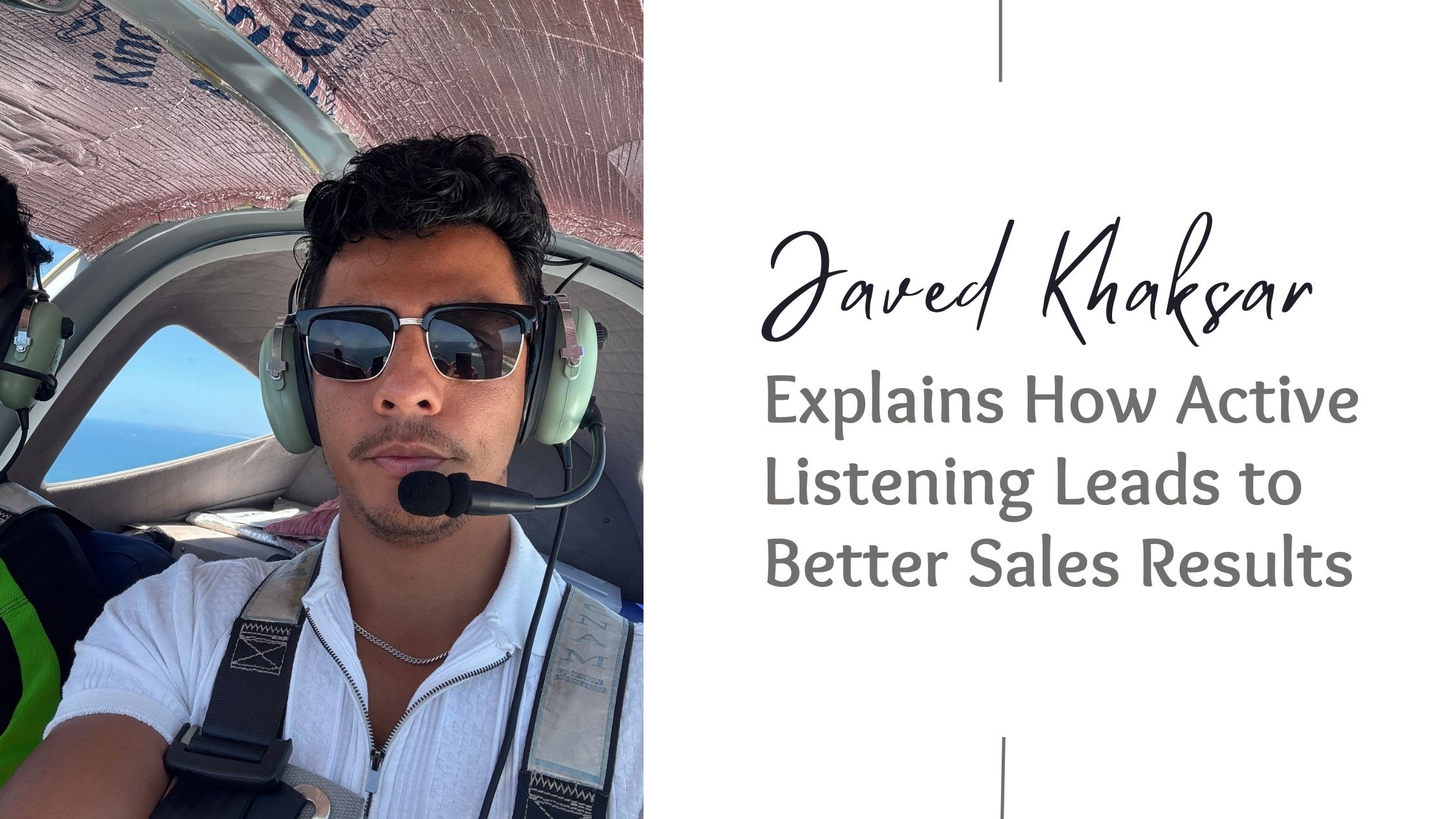
Javed Khaksar Explains How Active Listening Leads to Better Sales Results
In sales, many people believe success comes from having the perfect pitch. While strong communication matters, listening is often the skill that makes the biggest difference. Javed Khaksar, a results-oriented sales professional with a strong background in customer service and client relationship management, believes that active listening creates stronger conversations, builds trust, and leads to better sales outcomes.
Instead of focusing on what to say next, I encourage sales professionals to focus on understanding the person in front of them. When customers feel heard, they are more likely to share valuable information that helps you provide the right solution.
What Is Active Listening?
Active listening means giving your full attention to the customer instead of simply waiting for your turn to speak. It involves understanding their concerns, asking thoughtful questions, and confirming that you have understood their needs correctly.
I believe active listening is more than staying quiet while someone talks. It means being fully engaged in the conversation. Customers can usually tell when someone is genuinely interested in helping them, and that creates a stronger connection from the beginning.
Why Listening Matters More Than Talking
One of the most common mistakes in sales is spending too much time explaining products or services before understanding the customer’s situation.
As Javed Khaksar often emphasizes, every customer has different goals, challenges, and expectations. If you begin with a prepared sales pitch, you may overlook what truly matters to them.
By listening first, you gather useful information that allows you to offer solutions that fit the customer’s needs rather than making assumptions.
Ask Questions That Encourage Conversation
Active listening begins with asking questions that invite customers to explain their experiences.
Instead of asking questions that can be answered with “yes” or “no,” try questions such as:
What challenges are you trying to solve?
What are your priorities when choosing a solution?
What has worked well for you in the past?
What concerns do you have before making a decision?
These questions encourage meaningful conversations and provide valuable insights that help you better understand the customer.
Show That You Understand
Listening also means letting customers know you understand what they have shared.
I often repeat or summarize important points during conversations. For example, I might say, “If I understand correctly, your main goal is to improve efficiency while staying within your budget.”
Simple responses like this show customers that you are paying attention. They also give customers the opportunity to clarify anything that may have been misunderstood.
Build Trust Before Making Recommendations
Trust is one of the most important factors in every sales relationship.
Customers are more comfortable accepting recommendations when they believe you understand their needs. Instead of pushing a product immediately, I prefer to discuss possible solutions based on what the customer has shared.
This approach creates conversations that feel helpful rather than transactional. Over time, it also encourages repeat business and customer loyalty.
Pay Attention to More Than Words
Active listening includes observing tone, pace, and emotion during conversations.
Sometimes customers may hesitate because they are unsure, confused, or worried about making the wrong decision. Recognizing these signals allows you to address concerns with patience instead of rushing through the discussion.
Being attentive to both verbal and non-verbal communication helps create a more positive customer experience.
Continue Improving Your Listening Skills
Like any professional skill, active listening improves with practice.
After each customer conversation, I recommend taking a few moments to reflect. Ask yourself whether you truly understood the customer’s concerns, whether you asked enough questions, and whether you spent more time listening than talking.
Small improvements over time can lead to stronger relationships and better sales performance.
Final Thoughts
According to Javed Khaksar, active listening is one of the most valuable skills any sales professional can develop. Customers appreciate conversations where they feel respected, understood, and supported rather than pressured.
By asking thoughtful questions, paying close attention, and responding with genuine understanding, sales professionals can build trust that leads to stronger relationships and better results. In my experience, listening is not simply part of the sales process—it is the foundation of meaningful customer connections and long-term success.




































































![AquaFusion Reviews – Is Hydrogen Water Worth the Hype? [AquaFusion Best Price]](https://manufacturers.network/btabcloud/uploads/2026/08/fdhjghjh-17858254138cl4p-250x156.png)
