Latching Metal Push Button Switch: The Difference Between Press and Hold
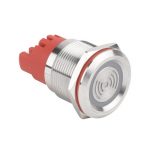
A Latching Metal Push Button Switch does something a momentary switch does not: it stays where you put it. Press once, the contacts close and remain closed. Press again, they open. That behavior sounds like a minor variation, but it changes where the switch is used, how it is wired, and what buyers need to verify before ordering. Confusing a latching switch with a momentary one is one of the more common mistakes in control panel specification.
The mechanism inside determines whether the switch latches. Some designs use a mechanical cam that alternates position with each press. Others use a push-push mechanism similar to a ballpoint pen. A third type uses a maintained contact arrangement where the actuator physically holds the contact block in the closed position. Each approach has a different feel, a different cycle life, and a different failure mode. Buyers who choose based on appearance rather than mechanism sometimes find that the switch they installed does not behave the way the panel design assumed.
Wiring practice differs from momentary switches. A latching switch typically controls a circuit directly, since it does not require a relay or control circuit to hold the state. This simplifies wiring in some applications and complicates it in others, particularly where the control system expects a momentary input. Buyers who replace a momentary switch with a latching one without reviewing the circuit can create a situation where equipment stays energized after the operator releases the button.
Contact configuration is a specification that buyers often overlook. Latching switches are available in normally open, normally closed, and changeover configurations. The choice determines whether the switch makes a circuit, breaks a circuit, or switches between two circuits when actuated. In a latching format, the state after actuation is what matters, not the state during actuation. Factories typically mark the contact arrangement clearly on the switch body, because miswiring a latching switch produces symptoms that are difficult to diagnose.
The metal housing serves the same purposes it serves in other industrial switches: durability, environmental protection, and appearance. Stainless steel suits washdown and corrosive environments. Aluminum offers lighter weight with adequate corrosion resistance when coated. Brass provides good machinability and plating options. The housing material must match the panel environment, because a switch that corrodes externally will fail even if the internal mechanism remains functional.