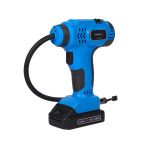
Lithium Battery Tire Inflator Air Pump: Piston Seal Quality and Pressure Sensor Accuracy Define Inflation Reliability
Lithium battery tire inflator air pumps are portable devices that use a rechargeable battery to power a compressor for inflating tires on cars, bicycles, motorcycles, and light trailers. They are used by drivers, cyclists, and roadside assistance providers who need to inflate tires without access to a wall outlet or a service station. The pump’s performance depends on two specifications that buyers weigh heavily: the piston seal quality and the pressure sensor accuracy. Those two factors determine whether the pump reaches the target pressure and whether the reading is trustworthy.
Piston seal quality is the specification that determines the pump’s efficiency and its service life. The piston moves inside the cylinder to compress the air, and the seal between the piston and the cylinder wall must maintain compression without excessive friction. A seal that is too soft wears quickly and loses compression. One that is too hard creates friction and heats the cylinder. The seal material must resist the heat generated during compression and the lubricants used in the cylinder. Factories that specify the seal material and that control the cylinder’s surface finish produce pumps that maintain their pressure.
Pressure sensor accuracy is the specification that determines whether the pump’s reading is reliable. The pump may include a digital gauge that displays the current pressure and stops the pump when the target is reached. A sensor that is not calibrated reads high or low, which causes the user to over- or under-inflate the tire. An inaccurate sensor also defeats the auto-stop function, which is the feature that makes the pump convenient. Factories that calibrate the sensor and that verify its accuracy against a reference produce pumps that the user can trust.
The compressor design affects both the pump’s speed and its efficiency. A single-cylinder compressor is simple and lightweight. A dual-cylinder compressor inflates faster but adds weight and draws more current. The motor must match the compressor’s load, and the battery must deliver the current the motor needs. Factories that match the compressor, the motor, and the battery produce pumps that inflate efficiently.
The battery capacity affects both the pump’s runtime and its portability. A battery that is too small inflates one tire and then needs recharging. One that is too large adds weight. Factories that specify the battery for the intended use produce pumps that complete the job on one charge.