Low-Voltage Rated Safety Industrial Plugs: The Lockout Decides the Safety
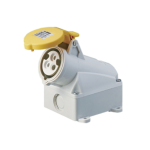
Low-voltage rated safety industrial plugs are specified where the supply is below the standard mains voltage and where the connection must be safe to make and break under load. Buyers compare IP rating, current rating, and pin configuration. The specification that decides whether the plug is safe in service is the lockout feature, because a plug that can be disconnected while energized, or that can be reconnected by the wrong person, is a hazard regardless of its other ratings.
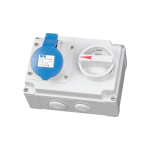
The lockout feature prevents the plug from being disconnected under load and prevents unauthorized reconnection. A plug with a mechanical interlock cannot be separated until the circuit is de-energized. A plug with a padlockable collar cannot be reconnected without removing the lock. Each addresses a different risk, and the application determines which is needed.
The switching mechanism affects the safety of making and breaking the connection. A plug that is rated for connection under load must have a switching mechanism that extinguishes the arc without exposing the operator. A plug that is not rated for load breaking must be interlocked so that it cannot be disconnected while energized. Factories that specify the switching capability and the interlock together produce plugs that are safe in the intended application.
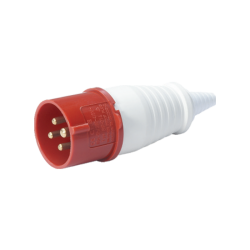
The pin configuration prevents a low-voltage plug from being connected to a higher-voltage socket. Different pin arrangements are used for different voltage ranges, and the arrangement must be consistent with the installation. A plug that can be forced into a higher-voltage socket defeats the purpose of the rating. Factories that follow a recognized pin convention produce plugs that cannot be misconnected.
The IP rating determines whether the plug can be used in wet or dusty conditions. The sealing must hold through repeated connection and disconnection, which is harder than holding a static seal. Factories that test the seal through repeated cycles produce plugs that maintain their rating.
The housing and the contact material must manage the current without overheating. At low voltage the current can be high, and the contact pressure and the housing’s heat resistance determine whether the plug runs cool. Factories that match the contacts and the housing to the current rating produce plugs that perform.
The practical question for a buyer is not the voltage rating or the IP rating. It is how the plug prevents disconnection under load and reconnection by unauthorized personnel. Those two answers decide whether the plug is safe in the installation. A plug that meets every electrical specification and can be pulled apart while energized is a plug that creates the hazard it was meant to prevent.