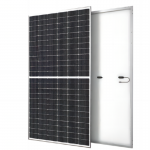
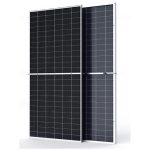
perc solar panels
https://www.jmsolarenergy.com/perc-solar-panel/
PERC (Passivated Emitter and Rear Cell) solar panels represent an advancement in photovoltaic (PV) technology aimed at increasing the efficiency of solar cells. The PERC technology was developed in the early 1980s by The University of New South Wales and has since been widely adopted by the solar industry due to its ability to enhance cell efficiency without significantly increasing costs. PERC solar panels are an enhancement of conventional monocrystalline or polycrystalline solar panels. They incorporate an additional passivation layer on the rear side of the cells, which helps in increasing the overall efficiency of the solar cells by reflecting the unused light back into the cell, thereby giving it a second chance to be converted into electricity.
How PERC Technology Works?
The traditional solar cell has a front surface that absorbs sunlight and generates electron-hole pairs. In PERC cells, a passivation layer is added to the rear surface. This layer:
Reflects Light: Unused sunlight that passes through the cell is reflected back into the cell, increasing the chance of photon absorption and thus electricity generation.
Reduces Recombination: Minimizes the recombination of electrons and holes, which can otherwise reduce the cell’s efficiency.