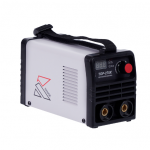
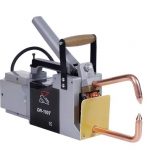
Portable Spot Welder Factory: Electrode Force and Pulse Control Determine Weld Nugget Consistency
Portable spot welder factories produce handheld or lightweight machines used in sheet metal repair, appliance manufacturing, and light fabrication. The portable format allows the operator to bring the welder to the workpiece rather than moving the workpiece to a fixed machine. The electrode force and the pulse control are the two specifications that determine whether the welder produces consistent weld nuggets. Buyers evaluating this category tend to focus on those two factors, because they determine the weld’s strength and the machine’s usability.
Electrode force is the specification that determines how the current flows through the workpiece. The electrodes must press the sheets together with enough force to ensure contact across the weld area. Too little force produces a high-resistance contact that generates heat at the surface rather than at the interface. Too much force deforms the sheets and may expel the molten metal. Factories that design the electrode holder and the force mechanism to deliver a consistent force, regardless of the operator’s strength, produce welders that produce consistent nuggets.
Pulse control is the specification that determines the weld’s heat balance. The welding current must be applied for a controlled duration to create the nugget without overheating the surrounding material. A pulse that is too short produces a weak weld. One that is too long burns through the sheet or leaves a mark on the visible surface. Factories that provide adjustable pulse duration and that control the current ramp produce welders that adapt to different sheet thicknesses and materials.
The transformer and the power control affect the machine’s output and its portability. A portable spot welder uses a transformer that steps down the voltage and steps up the current. The transformer must be sized for the maximum sheet thickness, but it also contributes to the machine’s weight. A transformer that is too large makes the welder difficult to carry. One that is too small limits the machine’s capacity. Factories that balance the transformer size against the portability requirement produce welders that suit the intended use.
The electrode material and the tip geometry affect both the weld quality and the electrode life. Copper alloys are common because they conduct current and resist wear. The tip diameter determines the current density and the nugget size. A tip that is too small concentrates the current and may cause expulsion. One that is too large reduces the current density and produces a weak weld. Factories that specify the electrode material and the tip geometry for the intended application produce welders that perform consistently.