Screw-Mounted Gray Caster Wheel: The Small Component That Decides Whether Equipment Moves or Sits
A Screw-Mounted Gray Caster Wheel is easy to overlook. It is a small part, low in cost relative to the equipment it supports, and often chosen last during a project. That sequence is backwards. The caster determines whether a cart, rack, or dolly rolls smoothly under load or becomes something users avoid moving. The screw mounting adds a specific constraint that shapes where this wheel works well and where it should not be used.
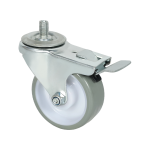
The stem is the defining feature. A threaded stem, usually with a matching nut or plate, allows the caster to be installed into a tapped hole or through a mounting plate without a separate bracket. This simplifies installation and reduces the height the caster adds to the equipment. It also concentrates the load into a smaller area than a plate-mounted caster would, which matters when the mounting surface is thin or made from a soft material. Buyers who choose screw-mounted casters for heavy loads on light platforms often find that the stem tears through or loosens, even when the caster itself is rated for the weight.
Gray wheels in this category are typically made from polyurethane, rubber, or a thermoplastic compound. The gray color often signals a specific formulation rather than a decorative choice. Polyurethane in gray is common for applications that need floor protection and quiet rolling. Rubber in gray appears where grip matters more than low rolling resistance. Thermoplastic compounds serve general duty at lower cost. The color alone does not tell the buyer which material is in use, which is why specification matters more than appearance.
Wheel hardness affects both the surface it rolls on and the effort required to move the load. A soft wheel absorbs shock and protects floors but increases rolling resistance, especially on carpet or uneven surfaces. A hard wheel rolls easily but transfers vibration to the equipment and can mark soft flooring. Buyers who match hardness to the floor surface, rather than choosing the hardest option available, get better results in daily use.
Bearing type follows the load and the duty cycle. Plain bearings suit light loads and occasional movement. Ball bearings reduce effort and are common in general-purpose casters. Roller bearings handle heavier loads and longer travel distances. A screw-mounted caster with roller bearings can carry substantial weight, but the stem diameter and mounting surface must be able to support that load without deforming.