Single-Compartment Powder Compact: Where the Hinge and the Pan Decide the Product
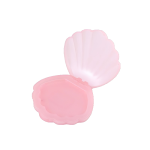
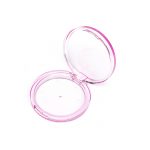
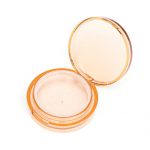
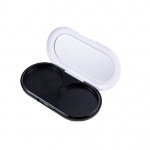
A Single-Compartment Powder Compact is the simplest format in the category: one pan, one lid, one closure. There is no tray of colors, no mirror-on-mirror arrangement, no secondary compartment. That simplicity is the reason the product remains common in foundation, setting powder, and blush. It is also the reason the design has nowhere to hide. With one compartment, every component has to perform, and a defect in any of them shows up in the product the consumer opens.
The pan is the heart of the compact, and its fit determines whether the product performs. A pan that seats loosely will rattle when the compact is moved and may shift during use, which can crack a pressed powder. A pan that seats too tightly may be difficult to insert during filling and may distort the container. Factories typically produce the pan and the container to tolerances that allow the pan to drop in without force and remain secure once the product is pressed. The pan’s depth also matters, because a pan that is too shallow produces a thin layer that cracks, and one that is too deep may not press evenly.
The hinge is the component that most often fails on a single-compartment compact. With only one compartment, the hinge is not supported by a tray or a second pan, and it receives the full force of the opening action. A hinge that is molded as a living hinge can crack if the material is not suited to repeated flexing. A pin hinge is more durable but adds assembly steps and a component that can loosen. Factories typically test the hinge through repeated open-and-close cycles, because a compact that loses its lid or whose lid becomes loose is a product the consumer will not repurchase.
The closure determines whether the compact stays closed in a bag or a drawer. A magnetic closure is simple and reliable but requires a magnet in both the lid and the base. A snap closure holds more securely but wears with repeated opening. A friction closure is the least expensive but is the most likely to open unintentionally. Factories typically match the closure to the brand’s positioning and to the handling the product will receive, rather than using a single closure for all compacts.
The container material affects both the appearance and the durability. ABS is rigid and takes a finish well. Polystyrene is less expensive but more brittle. Acrylic offers a premium appearance but scratches more easily. Some compacts use a rigid frame with a transparent window so the product color is visible. Factories typically specify the material based on the brand’s target and the conditions the compact will encounter.