Splicing Door Panels: Where the Joint Line Decides the Whole Surface
Splicing door panel interior decoration means joining narrower panels into a larger door face, and the product lives or dies at the joint line. A buyer looking at a finished door sees one continuous surface. The manufacturer knows that surface is a series of joints, and the question is whether those joints disappear or announce themselves.
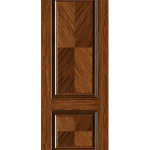
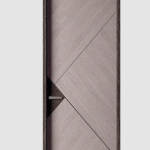
Grain alignment is the first discipline. Each panel carries a grain pattern with a direction and a position within that pattern. When panels are joined, the grain must continue across the joint without a break, a change in tone, or a shift in direction. A factory that sorts panels by grain position before joining produces a face that reads as one piece. One that joins panels in the order they arrive produces a visible line even when the panels are the same color.
Tone matching is the second discipline. Panels from different production batches vary slightly in color, even when the specification is the same. A face assembled from different batches shows a line at the joint that no amount of finishing removes. Factories that source panels for a run from the same batch and verify tone under consistent lighting produce faces that look uniform.
The joint itself must be strong enough to survive handling, bonding, and the door’s service life. Edge gluing, tongue-and-groove profiles, and dowel joints are common. A joint that is too visible shows through the finish. One that is too weak opens during handling or after installation. Factories that test joint strength and inspect for visible seams before the panel leaves the production area catch the problems that would otherwise appear on the finished door.
Flatness is harder to maintain across a spliced panel than a single piece. Each panel contributes its own variation in thickness, and the joints can create high or low spots if the panels are not aligned precisely. Calibration sanding after assembly helps, but it must be controlled to avoid sanding through the surface. Factories that measure flatness across the full panel, not just at the center, catch the deviation at the joints.
The practical question for a buyer is not the surface material or the color. It is how the supplier sorts the panels and how it verifies the tone and the flatness before joining. A supplier that can describe this process delivers a face that looks continuous. A supplier that joins panels and inspects the finished surface delivers a face where the joints are the first thing the customer notices.