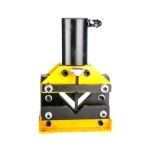
Split Type Hydraulic Pipe Bender: Where the Split Frame Solves a Placement Problem
A Split Type Hydraulic Pipe Bender is a bending tool whose frame opens so the pipe can be placed into the bending shoe from the side rather than threaded through from the end. The split design addresses a specific problem: in installed systems, the pipe may be connected at both ends, or the space around it may be too tight to slide a closed bender into position. The hydraulic mechanism provides the bending force, and the split frame provides the access. Understanding how the two work together explains where this tool is the practical choice.
The split frame changes the sequence of the bending operation. With a closed bender, the operator places the pipe into the shoe, positions the frame, and applies force. With a split bender, the operator opens the frame, places it around the pipe at the bend location, closes and locks the frame, and then applies force. That additional step is the price of access, and it must be designed so that the frame closes and locks securely before the bending force is applied. A frame that does not lock fully may shift during bending, which produces an inaccurate bend or damages the pipe.
The bending shoe determines the radius and the quality of the bend. Different pipe sizes and materials require different shoes, and the shoe must support the pipe wall to prevent collapse or wrinkling. Factories typically offer shoes for the pipe sizes the bender is designed to handle, and they specify the minimum wall thickness and the maximum bend angle. Buyers who bend thin-wall pipe or use the bender at the limit of its angle range should confirm that the shoe is suitable, because a shoe that does not support the wall will produce a defective bend.
The hydraulic mechanism provides the force, and the force required depends on the pipe diameter, the wall thickness, and the bend radius. A tight radius requires more force than a gradual one. A large-diameter pipe requires more force than a small one. Factories typically rate the bender for a maximum pipe size and a maximum wall thickness, and the rating assumes a specific bend radius. Buyers who need a tighter radius than the rating assumes may find that the bender cannot achieve it, regardless of the hydraulic capacity.