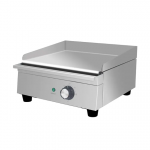
Stainless Steel Commercial Electric Panini Grill Kitchen Machine: Where Contact Pressure Shapes the Result
A Stainless Steel Commercial Electric Panini Grill Kitchen Machine is bought by cafes, delis, food trucks, and restaurants that need to produce pressed sandwiches consistently during a service period. Buyers usually compare models by plate size, power rating, and price. The specification that actually determines whether the grill produces even, well-marked sandwiches is contact pressure—how the upper plate meets the food—and that figure is rarely printed on the datasheet.
The cooking surface is where the product is defined. Flat plates suit panini and toasted sandwiches. Ribbed plates produce grill marks and allow fat to drain. Combination units offer one flat and one ribbed surface. The choice affects both appearance and cleanup. Ribbed surfaces drain grease but require more effort to clean between uses. Flat surfaces are easier to wipe down but hold fat on the surface. Buyers who choose based on the menu, rather than on which surface looks more professional, get better day-to-day results.
Contact pressure determines how heat transfers into the bread and filling. A grill with a floating upper plate applies consistent pressure across uneven sandwiches. A grill with a fixed hinge applies more pressure at one end than the other, which produces uneven browning and filling that is hot at one edge and cool at the other. Some units include adjustable spring tension so the operator can match pressure to the sandwich type. A pressed ciabatta and a delicate croissant require different force, and a grill that cannot adjust between them will compromise one or the other.
Plate thickness and material affect recovery time. A thick plate stores heat and recovers quickly when a cold sandwich is placed on it. A thin plate loses temperature and requires the thermostat to cycle more frequently. Stainless steel is the common exterior material because it resists corrosion and cleans easily, but the cooking surface may be a different material or coating selected for release properties. Buyers who assume the entire unit is stainless steel may be surprised to find that the cooking surface is aluminum or a coated plate, which is a design choice rather than a shortcut.
Thermostat control and temperature range determine how the grill fits the menu. A unit with a narrow range may not reach the temperature needed for quick searing. One with a wide range but slow recovery may produce inconsistent results during busy periods. Digital controls hold temperature more tightly than mechanical thermostats, but they add cost and a component that can fail. Buyers who operate the grill at a single temperature most of the day may not need the tighter control.