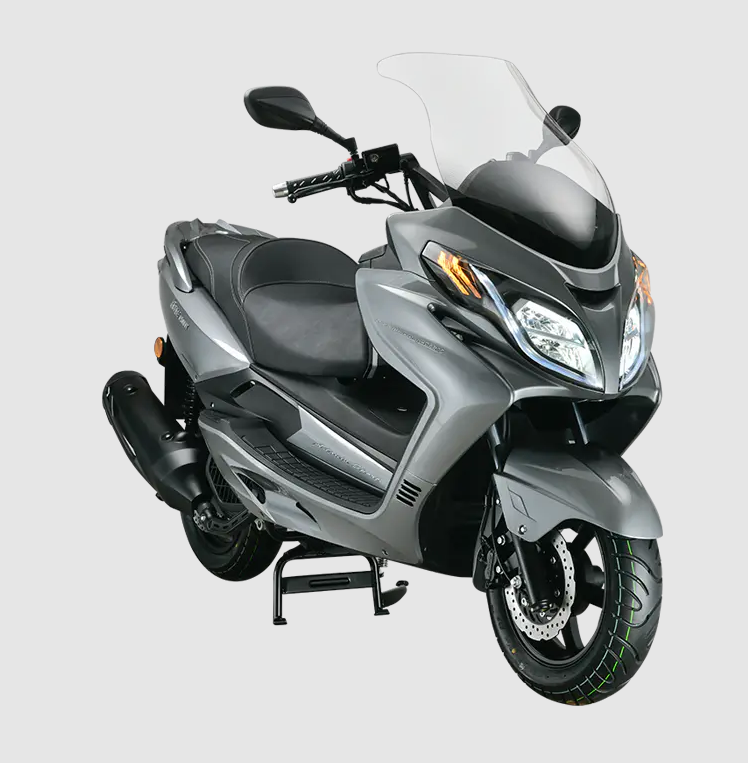
The Relevance and Future of Gasoline Powered Scooters
In many parts of the world, gasoline powered scooters have long been a symbol of convenience, affordability, and mobility. Compact and efficient, these vehicles have played a vital role in urban transportation for decades. Especially in densely populated regions such as Southeast Asia, Southern Europe, and Latin America, gasoline powered scooters provide an essential solution to the challenges of traffic congestion, limited parking, and rising transportation demands.
The key appeal of gasoline powered scooters lies in their balance between performance and cost. Compared to cars, they are far more economical in terms of fuel consumption and initial purchase price. A typical gasoline powered scooter can travel over 100 miles on a single gallon of fuel, making it an attractive option for daily commuting. Moreover, maintenance costs are relatively low, and the availability of spare parts is widespread, particularly for well-known brands.
In cities where public transportation infrastructure is lacking or unreliable, gasoline powered scooters fill a crucial gap. They allow users to travel directly from point A to point B without relying on bus or train schedules. Their small size also allows them to maneuver through narrow streets and crowded roads, providing unmatched agility in urban environments. For many small business owners, delivery workers, and students, these scooters are not just a convenience but a necessity.