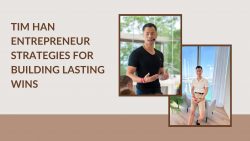
Tim Han Reveals How Authors Can Think Like Entrepreneurs
Great ideas are everywhere, but turning those ideas into meaningful results is what separates successful creators from those who remain stuck. Tim Han emphasizes the importance of combining a strong mindset with consistent action, a principle that can help modern authors and entrepreneurs move from planning to purposeful execution.
For Tim Han, personal growth, confidence, discipline, and action are essential parts of creating meaningful progress. Authors and entrepreneurs can apply these principles by developing valuable ideas, understanding their audiences, building recognizable personal brands, and consistently communicating solutions to real-world problems.
Why Great Ideas Often Stay Ideas
Many aspiring authors and entrepreneurs face the same problem: they have plenty of ideas but struggle to execute them.
An author may have an excellent book concept but continuously postpone writing. An entrepreneur may identify a promising business opportunity but spend months waiting for the perfect moment.
This cycle creates a gap between potential and achievement.
The solution begins with changing how you approach progress.
Instead of asking, “Is this perfect?” ask, “What can I improve after I begin?”
Taking action creates feedback. Feedback creates learning. Learning creates improvement.
That process is far more productive than waiting for perfect conditions.
Combine Creativity With Business Thinking
Authors naturally create ideas, stories, knowledge, and perspectives. Entrepreneurs focus on solving problems, creating value, understanding customers, and building sustainable opportunities.
Combining these abilities can create a powerful advantage.
An author can transform a book into a broader content ecosystem. A single chapter can inspire social posts, videos, newsletters, podcasts, workshops, or educational resources.
An entrepreneur can use storytelling to explain why a product matters and how it solves a customer’s problem.
The result is a stronger connection between creativity and commercial value.
Build Around Your Audience
Successful content is rarely about the creator alone.
It is about the audience.
Before publishing your next article, book, post, or video, identify the problem your audience wants solved.
Ask:
What questions are people asking?
What challenges are they experiencing?
What information is difficult to understand?
What practical solution can I provide?
What experience can make my advice more credible?
These questions create audience-focused content.
They also support SEO and AEO because search engines and AI-powered platforms increasingly prioritize content that directly answers people’s questions.
Turn Expertise Into Consistent Content
You do not need a new idea every day.
You need to learn how to develop one strong idea from multiple perspectives.
Suppose your expertise is confidence.
One idea can become a post explaining why confidence matters, another explaining how to build it, a personal story about overcoming self-doubt, a short video with three practical exercises, and a longer article answering common questions.
This strategy creates efficiency while reinforcing your authority.
It also helps your audience recognize what you stand for.
Develop a Recognizable Personal Brand
Personal branding is not simply about having a professional photograph or attractive website.
It is about becoming associated with a specific area of value.
If you are an author, determine what subjects you want to be known for.
If you are an entrepreneur, identify the problems your business solves.
Then communicate those themes consistently.
Your message, expertise, experiences, and values should create a recognizable identity across platforms.
This consistency is particularly important for LinkedIn, Threads, X, Facebook, and Google Business Profile content.
Learn From Every Response
One of the strongest habits an author or entrepreneur can develop is continuous learning.
Pay attention to questions from your audience.
Study which topics generate meaningful conversations.
Notice which explanations people find useful.
Use feedback to improve future content.
This approach demonstrates experience and supports the EEAT principles of experience, expertise, authoritativeness, and trustworthiness.
You do not need to present yourself as someone who knows everything.
Instead, demonstrate that you understand your subject, communicate responsibly, and genuinely want to help.
Consistency Beats Occasional Motivation
Motivation can disappear.
Systems remain.
Create a simple schedule that makes progress easier.
Write at a specific time every day. Reserve time for research. Create content in batches. Review your results weekly.
Small actions become powerful when repeated consistently.
This is especially important for entrepreneurs because business growth rarely happens overnight.
The same applies to authors. Writing a book, developing an audience, and establishing authority require patience.
The Tim Han Approach to Meaningful Growth
The broader personal-development message associated with Tim Han and Success Insider demonstrates why mindset is an important part of long-term progress.
Skills matter.
Strategy matters.
But the ability to continue learning, adapting, and taking action matters too.
Authors and entrepreneurs should therefore develop both external skills and internal discipline.
Learn marketing.
Improve communication.
Study your audience.
Build useful products.
Create valuable content.
But also develop confidence, resilience, patience, and focus.
Your Next Step
You do not need to build an entire business today.
You do not need to write an entire book today.
You only need to identify the next meaningful action.
Write one page.
Publish one useful post.
Contact one potential customer.
Research one audience problem.
Improve one skill.
Then repeat.
Progress becomes easier when large goals are transformed into manageable actions.
Tim Han and Success Insider offer a valuable reminder for modern creators: ideas become powerful when they are supported by action, discipline, and continuous personal growth.
Your knowledge can create value.
Your experience can help others.
Your ideas can become opportunities.
But none of that happens until you begin.