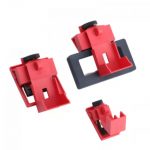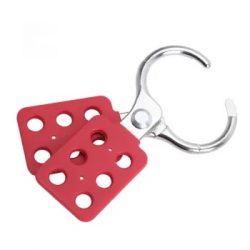
Universal Valve Lockout
Universal Valve Lockout Devices — One Device for All Standard Valve Types
A universal valve lockout is designed to secure a wide range of valve types — including ball valves, butterfly valves, gate valves, globe valves, and plug valves — with a single adjustable device, eliminating the need to stock separate lockout tools for every valve size and style on site. Unlike valve-specific lockout devices, a universal valve lockout uses an adjustable clamp, wraparound arm, or cable system to accommodate different handle widths, lever sizes, and handwheel diameters across mixed-brand process piping environments.
Our universal valve lockout devices are manufactured from industrial-grade reinforced nylon and stainless steel, offering corrosion resistance, chemical compatibility, and durability for use in oil and gas, chemical processing, water treatment, manufacturing, and utilities. All devices accept standard lockout padlocks and comply with OSHA 1910.147 and international LOTO standards.
As a factory-direct lockout tagout manufacturer, we supply universal valve lockout devices to EHS managers, safety distributors, and MRO suppliers worldwide — with OEM customization and wholesale pricing available.
Types of Universal Valve Lockout We Manufacture
Our range covers the main universal valve lockout formats used across industrial LOTO programs:
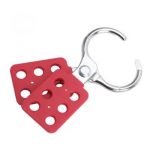
Adjustable Clamp Universal Valve Lockout – An open-jaw or scissor-clamp design that tightens around ball valve levers, butterfly valve handles, and quarter-turn actuators of varying widths. A set screw or locking pin holds the device in place; a padlock hasp prevents removal until authorized.
Universal Valve Lockout with Wraparound Arm – Modular blocking arms that extend around the valve handle or lever to prevent rotation. Available with small and large arm extensions to cover a wide range of valve handle sizes. Suitable for butterfly valves, three-way valves, four-way valves, and T-handles.
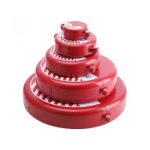
Universal Gate Valve Lockout (Handwheel Type) – A wraparound strap or spoke-locking device that fits handwheels of various diameters, preventing the gate valve from being opened or closed. Adjustable to fit handwheel diameters from 50 mm to 300 mm.
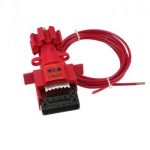
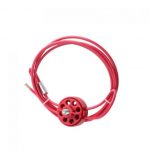
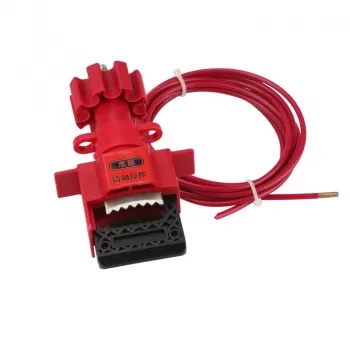
Universal Valve Lockout with Cable – Combines the adjustable clamp body with a flexible galvanised steel cable (typically 1.8 m or 2 m), allowing the device to secure gate valves, oversized handwheels, and irregular valve configurations that fixed-arm designs cannot reach.
Hybrid Universal Valve Lockout – A two-in-one device with an integrated locking clamp for lever-operated valves and a built-in cable attachment for handwheel-operated valves, covering both valve types with one device. Ideal for facilities with mixed valve types throughout the same process line.
Not sure which model suits your valve configuration? Contact our technical team with your valve type, handle width, or handwheel diameter — we will recommend the correct device or develop a custom solution.
Key Specifications & Features
Material: Industrial-grade reinforced nylon body with embedded stainless steel components — corrosion-resistant, chemical-resistant, and suitable for outdoor and washdown environments.
Compatible Valve Types: Ball valves, butterfly valves, gate valves, globe valves, plug valves, three-way and four-way valves, T-handle and lever-operated valves.
Handle / Lever Width Range: Adjustable clamp versions typically accommodate lever widths from 8 mm to 55 mm; cable versions cover handwheel diameters from 50 mm to 300 mm.
Padlock Compatibility: Standard 5 mm–8 mm shackle opening accepts all standard lockout padlocks. Multiple padlock holes available on selected models for group lockout procedures.
Temperature Range: –20°C to +85°C — suitable for cold storage, outdoor pipework, and elevated-temperature process environments.
Colors Available: Red (standard), yellow, blue, orange — for color-coded multi-department or contractor LOTO programs.
Cable Options (where applicable): 1.8 m or 2 m galvanised steel cable, PVC-coated for grip and corrosion protection.
Compliance: Meets OSHA 1910.147, ANSI Z244.1, and CE requirements for mechanical energy control and valve lockout applications.
Universal vs. Valve-Specific Lockout Devices — Which Do You Need?
Choosing between a universal valve lockout and a valve-specific device depends on your site’s valve inventory and maintenance program:
Choose a universal valve lockout when: Your facility has multiple valve brands, sizes, and types across the same process line. A single universal device reduces the number of different lockout tools your maintenance team needs to carry, simplifies your LOTO kit inventory, and lowers overall procurement cost per valve isolation point.
Choose a valve-specific lockout when: You have a large number of identical valves of the same size and type — for example, a bank of 50 mm ball valves on a process line — where a dedicated device provides a more secure, precise fit and faster application by maintenance technicians.
Many industrial facilities use both: valve-specific lockouts for high-frequency isolation points and universal valve lockouts for occasional-access or non-standard valves. Our full range of mechanical lockout devices covers both approaches.
A Universal Valve Lockout is especially useful for maintenance teams working across facilities with different valve sizes and operating mechanisms. Instead of carrying a separate device for every isolation point, technicians can use an adjustable solution for multiple valve configurations. This flexibility makes the Universal Valve Lockout suitable for maintenance shutdowns, equipment servicing, pipeline inspection, and other industrial energy-isolation tasks.
For facilities that need a practical universal valve safety lockout solution, the device should securely restrict valve movement while remaining easy for authorized workers to install and verify. A properly selected universal valve safety lockout can help standardize valve isolation across mixed equipment, simplify LOTO device management, and provide a clear physical barrier against accidental valve operation during maintenance.