Welding Machine Factory: The Arc Is Everything
A welding machine is not a power supply. It’s a tool that shapes metal by controlling heat. And heat control is not a one-size-fits-all formula.
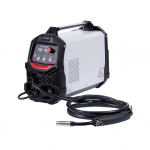
MIG welding needs smooth, consistent voltage with fast correction. If the machine hesitates, the wire sticks or the weld pools stutters. Our MIG drivers use real-time voltage sensing and adjust within microseconds, keeping the arc soft or aggressive based on the operator’s hand speed—not fixed presets.
TIG demands cleanliness. Any impurity in the waveform shows up as tungsten erosion or arc wander. Our TIG units filter the output until it’s clinically stable, delivering DC and AC waveforms that start softly and hold tight, even on thin aluminum that would blow through with less precise control.
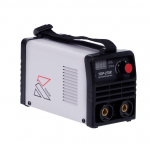
Stick welding is about persistence. Operators drag rods through rust, paint, and rain. They work off generators with fluctuating power. Our stick welders strip away digital distractions and use simple, tough circuitry that re-strikes instantly and runs cool even when pushed to the limit.
We build three different machines because they are three different jobs. One assembly line produces MIG platforms with high-speed control boards. Another builds TIG units with isolation transformers and fine-current sensing. The third packs stick welders with oversized diodes and passive cooling. Testing follows the same logic: MIG units run hour-long beads, TIG machines are scored on arc-start reliability, stick welders are dropped and dragged to prove they still work.
Customization isn’t about decals. It’s about matching the arc characteristic to the application. Thin gauge? We soften the response. Heavy plate? We harden it. Aluminum? We add AC frequency control. The machine follows the material.
A welding machine factory should never forget that welders don’t buy amps. They buy confidence that the arc won’t break, won’t wander, and won’t fail when it matters.