Wooden Grain Door For Interior: Where the Pattern Has to Look Like Wood and Behave Like a Door
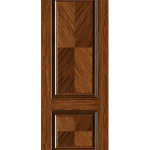
A Wooden Grain Door For Interior is a door that presents the appearance of wood without necessarily being made from solid timber. The grain pattern may be printed on a substrate, laminated onto a core, or veneered with a thin layer of real wood. Each approach produces a different result, and each carries different production requirements. Buyers who choose based on appearance alone may find that the door looks correct in the showroom and behaves differently once it is installed, painted, or exposed to the conditions of a real interior.
The substrate determines how the door performs as a structure. Solid wood doors move with humidity and can warp or crack if they are not properly seasoned and finished. Engineered cores, such as MDF or particleboard, are dimensionally stable and resist movement, which makes them suitable for interior doors that will be painted or laminated. A hollow-core door is light and inexpensive but offers less sound insulation and feels different when touched. Factories typically match the substrate to the application and the price point rather than using one core for all products.
The grain surface is where the appearance is created, and the method affects both realism and durability. Printed grain on a primed or coated surface offers consistent patterns and low cost, but it may look flat compared to real wood. Laminated grain uses a melamine or PVC film that provides a textured surface and better resistance to moisture and abrasion. Veneer uses a thin layer of real wood, which gives the most authentic appearance but requires careful handling and finishing to avoid splits and uneven color. Factories that understand the trade-offs can advise customers on the appropriate surface for their application rather than treating all grain surfaces as equivalent.
Matching grain across a door and its frame is a quality issue that buyers notice immediately. A door and frame produced from different batches may have slightly different tones or patterns, which is visible when the door is closed. Factories that produce doors and frames together, or that select matching components from the same production run, reduce the risk of visible mismatches. Those that source components separately may deliver a door that looks correct on its own and out of place in the opening.