Antistatic Black Epoxy Board: Conductive Filler Dispersion and Surface Resistivity Define Static Control
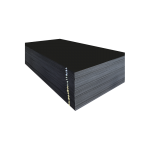
Antistatic black epoxy boards are laminates formulated with conductive fillers that provide controlled dissipation of static charges while maintaining the mechanical and dielectric properties of a standard epoxy glass laminate. The black color comes from carbon-based fillers dispersed in the resin. The boards are used in electronic equipment housings, test fixtures, cleanroom panels, and material handling components where static discharge could damage sensitive devices. Their performance depends on two specifications that are set during production: the conductive filler dispersion and the surface resistivity. Those two factors determine whether the board dissipates static evenly and whether it meets the resistivity range the application requires.
Conductive filler dispersion is the specification that determines whether the board’s conductivity is uniform. The carbon black or graphite filler must be distributed evenly through the resin, without agglomerates or areas of low concentration. An agglomerate creates a localized area of high conductivity, while a low-concentration area creates an insulating patch. Either condition produces a board that does not dissipate static reliably. Factories that control the mixing and the dispersion and that verify the filler distribution produce boards with uniform conductivity.
Surface resistivity is the specification that determines whether the board falls within the antistatic range. Antistatic materials typically have a surface resistivity between 10^6 and 10^9 ohms per square. A board that is too conductive may cause a rapid discharge that damages components. One that is too resistive does not dissipate the charge. The resistivity depends on the filler content, the dispersion, and the surface condition. Factories that measure the resistivity on finished boards produce products that meet the specification.
The filler content affects both the conductivity and the mechanical properties. A higher filler content increases the conductivity but reduces the mechanical strength and the dielectric performance. A lower content may not reach the antistatic range. Factories that balance the filler content against the application’s requirements produce boards that perform.
The resin system affects the board’s dielectric strength and its thermal stability. An epoxy system provides good dielectric performance and resistance to thermal aging. The cure must be complete to achieve the specified properties. Factories that control the resin and the cure produce boards that meet the specification.
The reinforcement material affects the board’s strength and its surface finish. A woven glass fabric provides high strength and a smooth surface. The weave affects the filler distribution and the surface resistivity. Factories that specify the reinforcement for the application produce boards that perform.
The testing and the documentation affect the board’s qualification. Factories that test the surface resistivity, the dielectric strength, and the mechanical properties of each lot, and that provide the records, qualify more easily with buyers who audit their supply chain.
The market implication is that antistatic black epoxy boards compete on conductive filler dispersion and surface resistivity rather than on the color alone. As electronics and cleanroom applications require reliable static control, suppliers who treat the filler and the resin as connected production requirements are better positioned than those who compete on price alone.