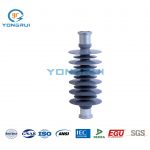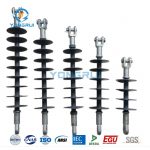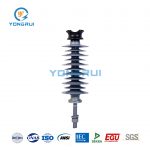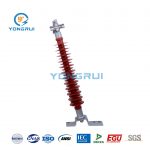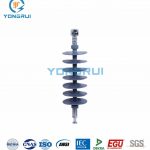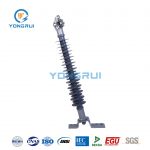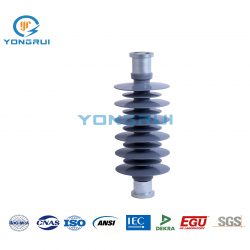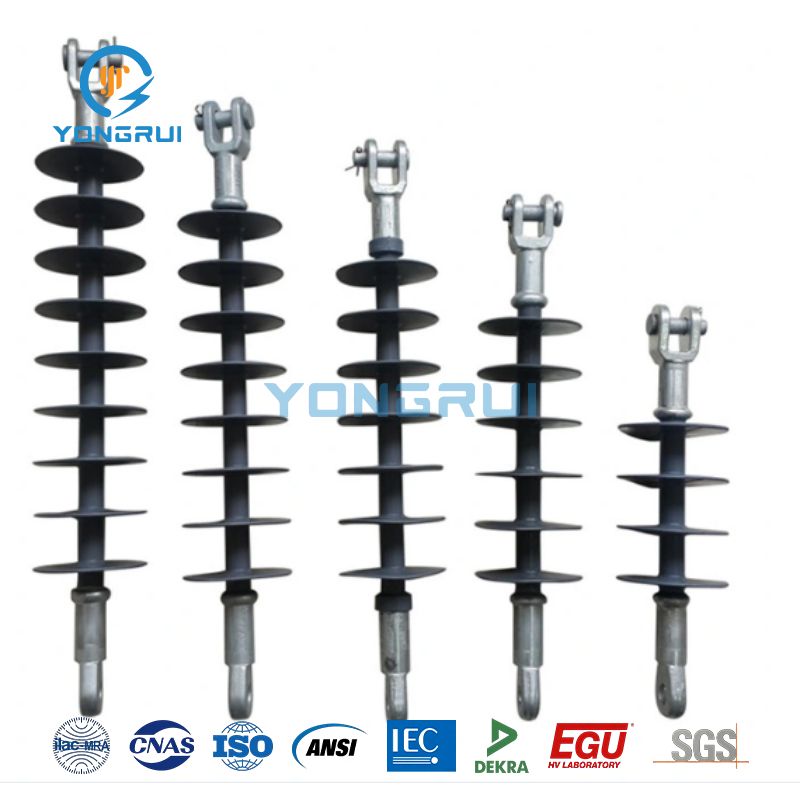
Composite Deadend Insulator
Composite Deadend Insulator
https://www.yrinsulators.com/composite-deadend-insulator.html
Composite deadend insulators are essential components in high-voltage transmission and distribution systems, designed to terminate and secure conductors while providing reliable electrical insulation. They combine modern composite materials with advanced engineering to deliver high mechanical strength, long-term durability, and superior resistance to environmental stresses.
Structure and Materials
Fiberglass-Reinforced Polymer (FRP) Core: Provides high tensile and bending strength to withstand the full tension of conductors and dynamic environmental loads.
Silicone Rubber Housing: Hydrophobic and pollution-resistant, the silicone rubber sheds protect the insulator from moisture, contamination, and surface flashover.
Metal End Fittings: High-strength galvanized or plated fittings secure the insulator to towers, poles, or anchor structures, and provide a reliable conductor attachment point.
Applications
Transmission and Distribution Lines: To terminate conductors at dead-end towers or anchor points.
Substations: For bus termination and isolation of critical equipment.
Industrial and Renewable Energy Projects: Where mechanical reliability and low maintenance are required.
Harsh Environmental Zones: Including coastal, industrial, and high-pollution areas, where traditional insulators may experience accelerated degradation.
Key Advantages
High Mechanical Strength: Supports full conductor tension and withstands wind, ice, and other environmental forces.
Lightweight Design: Easier handling and installation compared with porcelain or glass insulators.
Hydrophobic and Pollution Resistant: Silicone rubber sheds repel water and reduce contamination accumulation, minimizing leakage current and flashover risk.
Long Service Life: Resistant to UV radiation, extreme temperatures, moisture, and chemical exposure, providing reliable operation with minimal maintenance.
Flexible and Safe: The composite design is less brittle than porcelain or glass, reducing the risk of breakage under impact.