Does Tank Size Affect Underground Oil Tank Removal Cost in NJ?
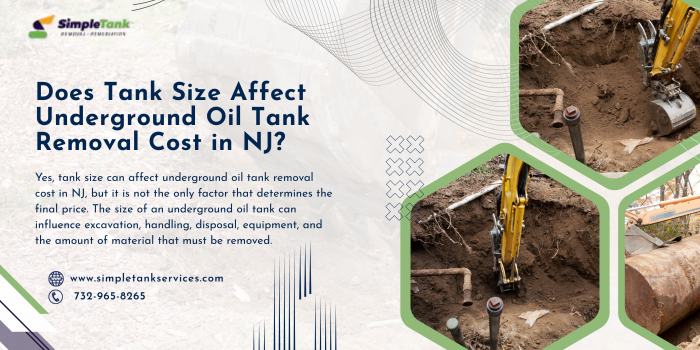
Yes, tank size can affect underground oil tank removal cost in NJ, but it is not the only factor that determines the final price. The size of an underground oil tank can influence excavation, handling, disposal, equipment, and the amount of material that must be removed. However, factors such as tank location, site access, tank condition, remaining oil or sludge, permits, and possible soil contamination can also affect the overall Oil Tank Removal Cost NJ.
For New Jersey homeowners, understanding these factors before work begins can make the removal process easier to plan and budget for.
How Tank Size Can Influence Oil Tank Removal Cost NJ
Underground residential oil tanks come in different capacities, commonly ranging from smaller tanks to larger 1,000-gallon or more installations. A larger tank may require additional effort to expose, empty, cut, remove, transport, and dispose of properly.
However, tank capacity does not automatically determine the total project price.
For example, a larger tank in an easily accessible area may be simpler to remove than a smaller tank located beneath a driveway, patio, landscaping, or another difficult-to-reach location.
This is why homeowners should look beyond tank size when comparing Underground Oil Tank Removal Cost NJ.
What Factors Determine Underground Oil Tank Removal Cost NJ?Tank Location
The location of the tank is one of the most important considerations. An underground tank located in an open yard may provide easier access for excavation equipment. A tank near a foundation, driveway, walkway, or other structure may require more careful work.
Accessibility
Limited access can increase labor and equipment requirements. If heavy equipment cannot easily reach the tank, the contractor may need to use alternative methods to safely complete the removal.
Tank Condition
The condition of the tank can also affect the work involved. Corrosion, structural deterioration, or damage may require additional precautions during excavation and removal.
Tank Contents
An old tank may contain residual heating oil, sludge, or other material. Proper handling and disposal are important parts of a professional oil tank removal project.
Soil Contamination
Tank removal does not always end when the tank is taken out of the ground. If petroleum contamination is discovered, additional soil testing and remediation may be necessary.
The extent of contamination can significantly affect the overall project cost, which is why homeowners should understand the difference between oil tank removal and potential soil remediation.
Does a 1,000-Gallon Tank Cost More to Remove?
Not necessarily.
A 1,000-gallon tank is larger than many residential tanks, but size alone does not establish a fixed price. The actual cost depends on the property’s circumstances and the scope of work required.
A professional evaluation can determine whether the tank can be removed using standard procedures or whether site-specific challenges need to be addressed.
What Is Usually Included in Oil Tank Removal?
A professional underground oil tank removal project may involve several stages:
Site assessment and planning
Obtaining required permits
Locating and exposing the tank
Removing remaining contents when applicable
Excavating around the tank
Cutting and removing the tank
Proper transportation and disposal
Inspection and documentation
Soil sampling when required
Additional remediation if contamination is identified
The exact scope varies from property to property, so homeowners should review the contract carefully before approving the work.
Why Fixed-Price Oil Tank Removal Can Be Helpful
Unexpected costs can make it difficult to budget for an oil tank project. A clearly defined fixed-price agreement can give homeowners a better understanding of what is included before work starts.
Simple Tank Services, an employee-owned residential oil tank removal company serving New Jersey, focuses on straightforward pricing for underground oil tank removal and related soil remediation services. Its stated pricing approach can include items such as permits, waste disposal, sand, foam, and other standard project requirements, depending on the scope of the job.
Homeowners should always confirm exactly what their quoted price covers and whether potential contamination or additional remediation is included.
Choosing an Oil Tank Removal Company in New Jersey
When comparing contractors, price should not be the only consideration. Look for a company with appropriate licensing, experience with residential underground tanks, proper disposal procedures, and knowledge of applicable New Jersey requirements.
It is also useful to ask:
Is the quoted price fixed or subject to additional charges?
Are permits included?
Is disposal included?
What happens if contamination is discovered?
Is soil testing included?
Will the company provide documentation after removal?
Are additional remediation services available if necessary?
Clear answers can help prevent misunderstandings later.
Conclusion
Tank size can influence Underground Oil Tank Removal Cost NJ, but it should never be considered in isolation. Location, accessibility, tank condition, remaining contents, excavation requirements, and possible soil contamination can all affect the total Oil Tank Removal Cost NJ.
For New Jersey homeowners planning an underground tank removal, Simple Tank Services provides residential oil tank removal and soil remediation services with a focus on straightforward, fixed-price solutions. Visit Simple Tank Services to learn more, request information, and keep it Simple.
Frequently Asked Questions
Does tank size directly determine Underground Oil Tank Removal Cost NJ?
No. Tank size is one factor, but location, accessibility, condition, contents, excavation requirements, and potential contamination can also influence the final cost.
Is a larger underground oil tank always more expensive to remove?
No. A larger tank may require more work, but the property’s access and the tank’s location can be just as important. A smaller tank in a difficult location may require more complicated work.
Does soil contamination increase Oil Tank Removal Cost NJ?
Potentially, yes. If testing shows petroleum contamination that requires additional excavation or remediation, those services can increase the overall project cost.
Should I get soil testing after removing an oil tank?
Soil testing may be appropriate when required by the circumstances of the removal or applicable procedures. Testing can help determine whether petroleum contamination is present and whether additional remediation is necessary.
What should be included in an oil tank removal estimate?
Ask whether the estimate includes permits, excavation, tank removal, transportation, disposal, materials, documentation, and any clearly defined testing or remediation services.
How can NJ homeowners get a more accurate removal price?
The most reliable approach is to have the property and tank evaluated by an experienced professional. The contractor can consider tank size, location, accessibility, condition, and other site-specific factors before providing a detailed estimate.