What Makes The Ranger Blueprint Different?
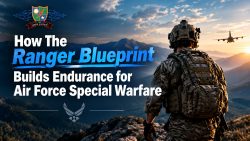
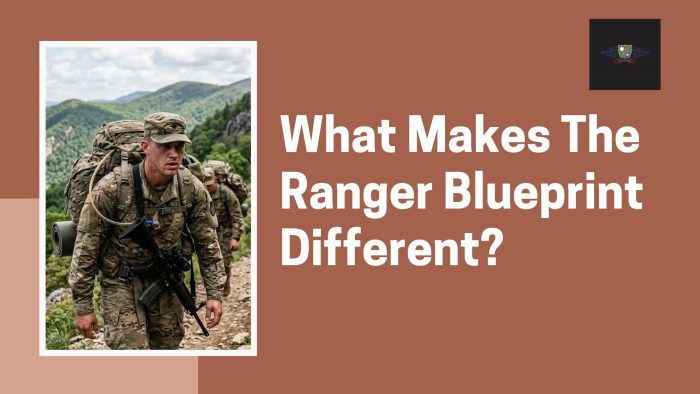
Preparing for special operations selection is not simply about becoming stronger or running faster. Candidates preparing for RASP, SFAS, BUD/S, MARSOC A&S, Air Force Special Warfare, and other demanding selection pipelines need to manage pressure, stay disciplined, and perform when conditions become difficult. The Ranger Blueprint takes a broader approach by developing four areas that work together: physical ability, mental strength, character, and identity.
Preparation Beyond Physical Fitness
Fitness is an important part of selection preparation, but it is only one part of the challenge. Candidates can meet physical standards and still struggle when fatigue, stress, uncertainty, or repeated setbacks appear.
The Ranger Blueprint focuses on helping candidates understand why their preparation matters and how their daily habits affect long-term performance.
This includes:
Building consistent training habits
Developing physical capacity for demanding environments
Improving mental discipline under pressure
Learning to stay accountable when motivation drops
The goal is not simply to complete workouts. It is to develop habits that candidates can rely on when training becomes uncomfortable.
A Four-Layer Approach
One of the key differences in The Ranger Blueprint is its focus on four connected areas.
Physical: Candidates need the endurance, strength, work capacity, and recovery habits required for demanding training.
Mental: Selection can create uncertainty and pressure. Mental preparation helps candidates continue making good decisions when they are tired or uncomfortable.
Character: Discipline is tested through repeated actions. Character development focuses on responsibility, consistency, humility, and doing the required work even when nobody is watching.
Identity: A candidate’s view of themselves can influence how they respond to setbacks. Building a stronger identity around discipline and responsibility can help support consistent behavior.
These layers are not separate. Physical preparation can support confidence, while mental discipline can improve training consistency. Character and identity can influence whether those habits continue when motivation disappears.
Built Around Real Selection Experience
The Ranger Blueprint was built by Pearce, a Ranger Regiment veteran. That experience provides a practical perspective on the standards and pressures associated with demanding military environments.
Rather than presenting preparation as a simple checklist, the program focuses on the behaviors and mindset that support long-term readiness.
This experience-based approach can help candidates think about questions such as:
Am I training consistently?
Can I maintain discipline when motivation is low?
How do I respond when training does not go as planned?
Am I preparing only for physical standards?
What habits will I carry into a demanding selection environment?
Preparation for Different Selection Pipelines
Different programs have different demands, so preparation should not be treated as identical across every pipeline.
Candidates may be preparing for:
Ranger Assessment and Selection Program (RASP)
Special Forces Assessment and Selection (SFAS)
Basic Underwater Demolition/SEAL training (BUD/S)
Marine Raider Assessment and Selection (MARSOC A&S)
Air Force Special Warfare
The Ranger Blueprint provides a framework that looks beyond one physical test and encourages candidates to develop broader readiness.
Why This Approach Matters
The biggest difference is the emphasis on becoming a more dependable candidate, not simply achieving better workout numbers. Selection preparation requires consistency over time.
A useful preparation mindset includes:
Train with a clear purpose.
Build habits before pressure arrives.
Accept accountability for daily actions.
Develop mental discipline alongside physical capacity.
Understand that readiness is built gradually.
Conclusion
The Ranger Blueprint stands apart by treating selection preparation as a whole-person process. Its four-layer approach physical, mental, character, and identity recognizes that demanding selection environments test more than fitness.
For candidates preparing for RASP, SFAS, BUD/S, MARSOC A&S, Air Force Special Warfare, or similar pipelines, this broader approach can provide a more complete way to think about preparation, discipline, and long-term readiness.