Double-Decker Wagon With Trailer: Capacity Stacking Reshapes the Camping Transport Decision
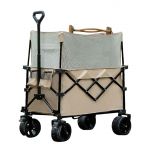
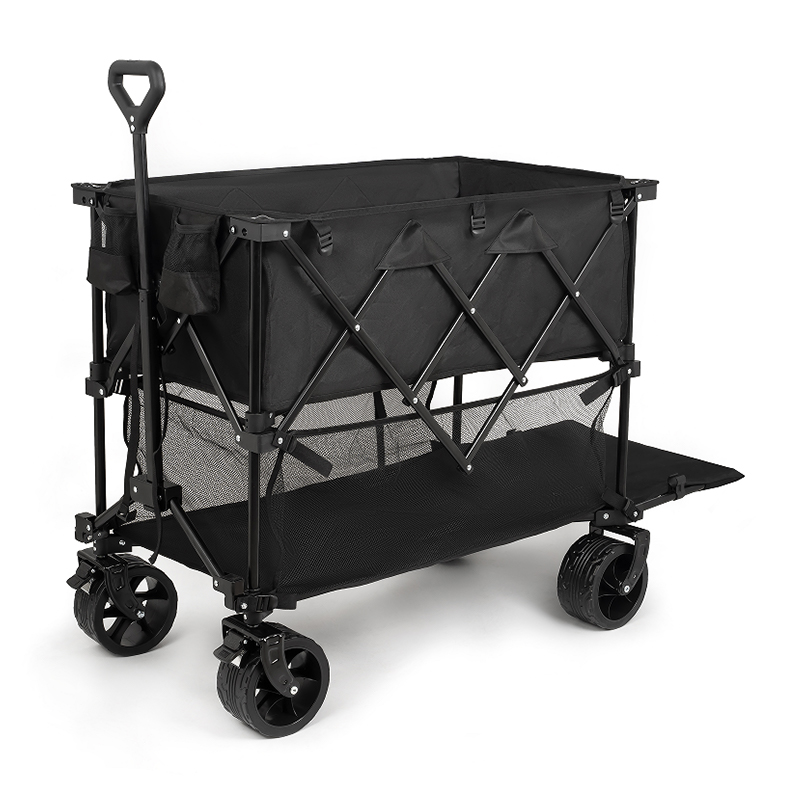
Double-decker wagons with trailer are drawing attention from camping families and event vendors who need to move more gear than a single-level wagon can carry without adding a second vehicle or making multiple trips. The double-deck design stacks two load levels on one wheeled base, while the trailer adds a separate towed platform behind. Together they increase capacity, but they also change how the wagon handles, how it folds, and how it is priced. Buyers evaluating this category need to weigh those changes against the alternatives.
The upper deck is the feature that defines the double-decker format. It provides a second load surface above the main compartment, which increases capacity without increasing the wagon’s footprint. The upper deck must be supported by the frame, and that support adds weight and complexity. A deck that is not rigid enough will sag under load and may interfere with access to the lower compartment. A deck that is too heavy makes the wagon difficult to fold and lift. Suppliers that design the deck as an integral part of the frame, rather than an accessory that sits on top, produce wagons that hold their shape under load.
The trailer adds capacity that the wagon itself cannot provide. It attaches to the rear of the wagon and follows it, which allows the user to carry long or bulky items that would not fit in the main compartment. The trailer must track properly behind the wagon, and its hitch must allow articulation without binding or disconnecting. A trailer that tracks poorly makes the wagon difficult to steer, and one that disconnects during use creates a hazard. Suppliers that design the hitch as a secure, articulating connection produce trailers that follow the wagon predictably.
The weight distribution changes when a trailer is added. The wagon’s center of gravity shifts rearward, which affects how it handles on slopes and turns. The user must adjust how they pull the wagon, and the wagon’s frame must handle the additional load without flexing. Suppliers typically test the wagon with the trailer attached under load, because a wagon that performs well alone may behave differently when towing.
The folding mechanism must accommodate both the double deck and the trailer. A wagon that folds compactly on its own may become bulky when the deck and trailer are included. The trailer must fold or detach for transport, and the deck must fold or collapse. Suppliers that design the folding sequence for the complete assembly, rather than for the wagon alone, produce a product that is practical to store and transport.