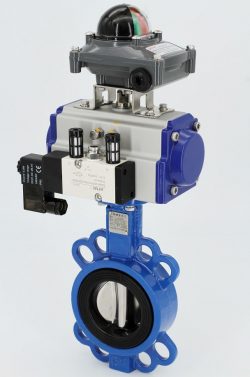
Flange Ball Valve
The flanged ball valve is a quarter-turn (90°) rotational motion valve that uses a perforated, pivoting ball to control fluid flow. It is designed with flanged end connections according to international standards, offering reliable shut-off and easy installation in industrial piping systems.
Key Components & Construction
Component Material Options Function
Body Cast iron, WCB (carbon steel), CF8 (304 SS), CF8M (316 SS) Pressure containment, pipeline connection
Ball Chrome-plated brass / Stainless steel (304/316) Rotating element that opens/closes flow
Seat PTFE, RTFE, PEEK, Nylon, Devlon Leak-tight seal around the ball
Stem Stainless steel (316/304) Transfers torque from handle/actuator to ball
Stem Seal PTFE + O-ring (Viton/FKM/EPDM) Prevents fugitive emissions
Flange Gasket Surface Raised face (RF), flat face (FF), or RTJ Sealing for flange bolting
Blow-out Proof Stem Anti-static device (standard on quality valves) Prevents stem ejection under pressure
Floating Ball Design (standard for ≤10″ / ≤Class 300): The ball is not fixed; line pressure pushes it against the downstream seat for sealing.
Trunnion Mounted Ball Design (for large sizes ≥12″ or high pressure): The ball is fixed with top and bottom stems, reducing torque and wear. Ideal for Class 600+.
Full Port vs. Standard Port- Full port: Ball bore equals pipe ID → no pressure drop, piggable- Standard port: Ball bore is 70-80% of pipe ID → lower cost, slight pressure loss
V-Port Ball Valve (for flow control, not just shut-off): Provides equal percentage flow characteristic, used in throttling applications.
For more information please contact China Water Valve Manufacturer