Resilient Gate Valve
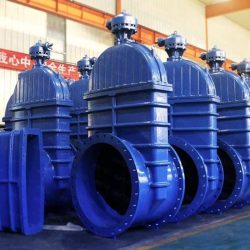
A resilient-seated gate valve uses a rubber-lined body and a coated or stainless steel gate to create a bubble-tight seal. The elastic seat compresses against the gate when closed, providing zero leakage. It is the modern replacement for traditional metal-seated gate valves in water and mild chemical services.
Rising Stem Gate Valve Key Components & Materials
Body – Ductile iron (GGG40/GGG50) or cast iron. Provides structural strength.
Rubber lining (seat) – Fully molded EPDM, NBR, or Viton inside the body. Creates the elastic sealing surface.
Gate (disc) – Ductile iron with full rubber coating, or stainless steel (304/316). Moves up and down to control flow.
Stem – Stainless steel (410, 304, 316). Non-rising type is most common.
Bonnet / Cover – Ductile iron. Seals the top of the body.
O-rings – EPDM or NBR. Provide stem sealing instead of traditional packing.
Coating (external) – Epoxy or fusion-bonded epoxy. Prevents atmospheric corrosion.
Non-Rising Stem (NRS) – Stem threads are inside the gate. The valve height does not change when opening or closing. Ideal for underground installations and limited vertical space.
Rising Stem (OS&Y) – Stem rises as the valve opens, making the position visible. Used for above-ground applications in pumping stations and treatment plants.
Wafer Type – No flanges. Fits between two pipe flanges with long bolts. Lightweight and compact.
Lug Type – Has threaded lugs on both sides. Allows removal of downstream piping without draining the system.