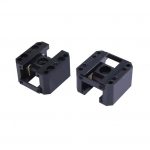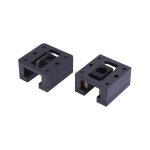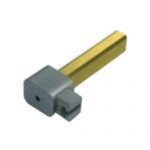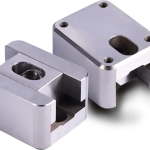
Inclined Ejector Slide vs. Standard Side Core Pull Function
Diverging Paths for Undercut Release
Both mechanisms are designed to release undercuts—features on a molded part that prevent it from being ejected straight out of the mold. However, their method of operation, point of actuation, and typical applications differ significantly. An inclined ejector slide exporter specializes in a component that combines ejection and lateral movement into one synchronized action, which is distinct from the independent operation of a standard side action.
Standard Side Core Pull: Independent Lateral Motion
A standard side core pull (or slide) is an independent unit within the mold. It is actuated before the mold opens or as it opens, typically by an angle pin, hydraulic cylinder, or cam. Its sole function is to move laterally (sideways) to clear the undercut. Once retracted, the mold opens fully, and then a separate, standard ejector system (ejector pins, sleeves, plate) moves forward in a straight line to push the part off the core. The side action and ejection are two separate, sequential motions driven by different mechanisms.
Inclined Ejector Slide: Combined Angled Ejection
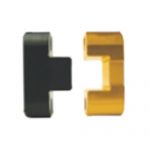
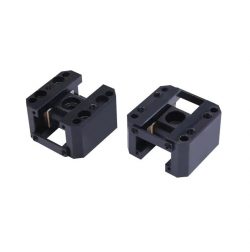
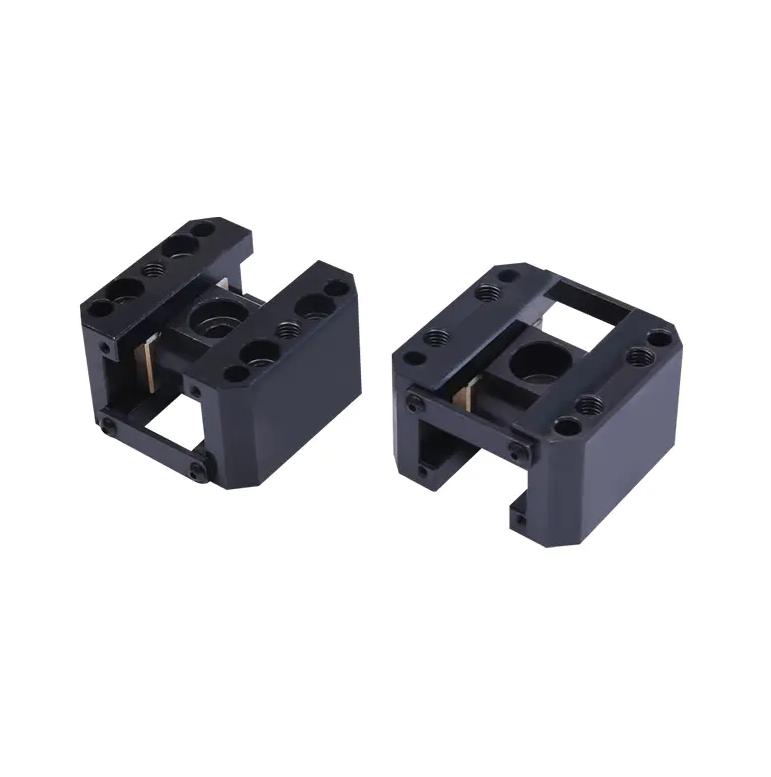
The component supplied by an inclined ejector slide exporter operates on an integrated principle. It is mounted in the ejector plate of the mold at a specific angle (hence “inclined”). When the ejector plate is pushed forward during the ejection phase, the inclined ejector slide does not move straight forward. Instead, it follows its angled guide, resulting in a simultaneous forward and lateral motion. This combined movement allows it to release an undercut at the same time as it pushes the part off the core. It is actuated by the main ejection force, not a separate cylinder or angle pin.