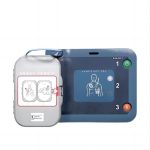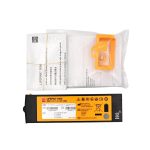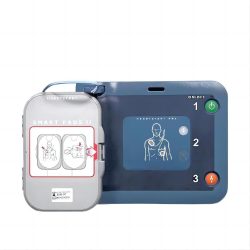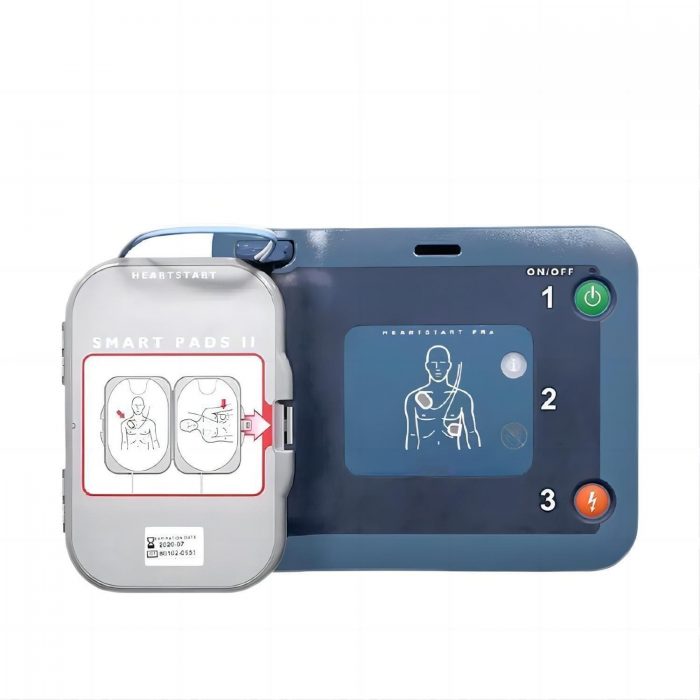
Original Philips HeartStart FRX Automated external defibrillator
The Philips HeartStart FRX Automated External Defibrillator (AED) is a professional-grade, rugged device designed for first responders and public access use. Its primary purpose is to deliver a life-saving shock to individuals experiencing sudden cardiac arrest. The FRX guides users with clear, calm voice instructions through every step, from CPR prompts to administering defibrillation.
Technical Parameters
The Philips HeartStart FRx AED Device is designed for reliability and effectiveness in a variety of challenging conditions.
Feature
Details
Size (H x D x W)
6 x 18 x 22 cm (2.4 x 7.1 x 8.9 in)
Weight
Approximately 1.6 kg (3.5 lbs) with battery and pads case
Environmental Sealing
IP55 (water jet proof and dust protected) per IEC60529
Drop Resistance
Withstands a 1.22 m (4 ft) drop onto a masonry surface
Crush Resistance
Withstands up to 500 kg (1100 lbs)
Battery Life
Typically 4 years in standby mode
Therapy Waveform
Truncated Exponential Biphasic (adjusted to patient’s impedance)
Energy Output
Adult: 150 Joules nominal into a 50-ohm load. Pediatric: 50 Joules nominal with the Infant/Child Key inserted
Quick Shock
Able to deliver a shock typically within 8 seconds after the end of CPR
Step-by-Step Instructions
The FRx is designed for ease of use, with clear, step-by-step voice instructions guiding the user through the process.
Check the Victim: Ensure the person is unresponsive and not breathing normally. Call emergency services.
Turn On the AED: Open the carry case and press the green On/Off button. The device will immediately begin providing voice instructions.
Attach Pads: Bare the patient’s chest and back. Open the pre-connected Philips HeartStart SMART Pads II case and peel one pad from the liner. Place the pads on the patient exactly as shown in the pictures on the pads/icons.
Analyze Heart Rhythm: Once the pads are correctly placed, the device automatically begins analyzing the heart’s rhythm. Ensure no one is touching the patient during this step. The caution light will flash and then turn solid.