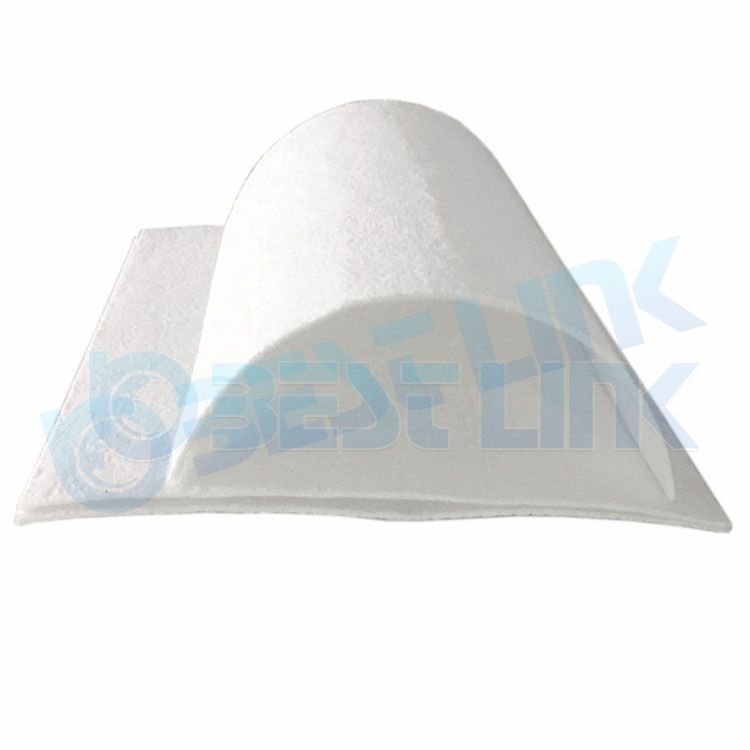
Silica aerogel insulation
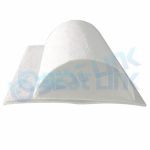
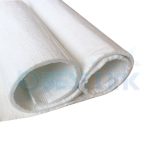
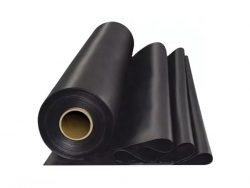
Product code: BL-C200 SERIES AEROGEL INSULATION THERMAL BLANKET
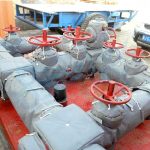
Silica aerogel insulation roll-Function & Application
For -200℃ to 200℃ pipes and equipment hot and cold insulation.For chemical,biological medicine pipes and equipment,liquid nitrogen,LNG etc.steam pipelines hot and cold insulation.
THERMAL CONDUCTIVITYT:Tested in accordance with ASTM C177
Temperature(℃)
23.78℃
37.9℃
93.3℃
149℃
204℃
260℃
316℃
371℃
Thermal conductivity mw/(m.k)
18
19
20
23
27
31
36
41
PHYSICAL PROPERTIES
Specification
BL-C200 SERIES
BL-C200-3
BL-C200-6
BL-C200-10
Thickness
3mm
6mm
10mm
Length
38m
38m
27m/36m
Width
1500mm
Color
White
Suggested Working
-200℃~200℃
Notes
Sizes could be on customers’requirement
Technical Data
Size Stability
0.5%
GB/T 8811
Compressive Property
@10% 10KPa
GB/T 13480
@25%100KPa
Fire Rating
A级
GB/T 8624
Tensile Strength
1000KPa
GB/T17911
Thermal Conductivity
-200℃ 0.010
GB/T 10295
-150℃ 0.012
-100℃ 0.013
-50℃ 0.015
25℃ 0.018
100℃ 0.020
200℃ 0.026
Aerogel insulation is up to five times more effective than traditional insulation materials, while being industrially robust across a broad temperature range in a space-saving, easy-to-use form, making it the most efficient industrial insulation on the market. Aerogel materialis the world’s lowest density solid and most effective thermal insulator. It is available in rolls or fabricated pieces for cryogenic, ambient and high temperature applications. Aerogel is a great solution for hot spots or very tight spaces.
Aerogels are a class of materials with a unique morphology. Aerogels are highly porous, typically comprised of 95-99% air by volume. These low-density, highly-porous solid materials are light and durable. These characteristics make aerogel insulation an effective solution for many different applications.
silica aerogel insulation, in particular, has unique insulative properties. Aerogel thermal conductivity is lower than that of air, so it’s capable of providing a greater thermal resistance benefit than air. This is due to having pore sizes in the mesoporous range of 2–50 nm. These restricted pore diameters are smaller than the mean free path of air, forcing molecules to take a tortuous path through the material, inhibiting transfer of heat. This is known as the Knudsen effect.
If you want to learn more, please visit our website.