Single Crate Mould Manufacturers Serve Durable Goods and Produce Handling Sectors
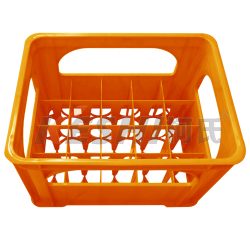
Single crate mould manufacturers are serving a specialized segment of the industrial mold-making industry, producing injection molds for reusable plastic crates used in agriculture, food processing, beverage distribution, and logistics applications. These molds produce crates in a single-piece design that offers durability, stackability, and efficient handling. The single crate format, as distinct from collapsible or multi-component crate systems, provides structural integrity and ease of cleaning, making it suitable for applications ranging from produce transport to warehouse storage. Demand has been supported by ongoing replacement cycles in the food supply chain and the expansion of reusable packaging programs.
The engineering design phase for single crate moulds involves balancing part strength with weight reduction, an important consideration for handling ergonomics and shipping efficiency. Single crate mould manufacturers must account for the material flow behavior of polypropylene or high-density polyethylene, the commonly specified polymers for crate production. Gate placement and runner system design determine how the molten polymer fills the cavity, with multi-gate systems often employed to achieve consistent wall thickness and uniform packing across the large part area. Rib structures and corner radii are designed to provide structural support while maintaining adequate material flow. Mold flow analysis is now a standard tool for predicting fill patterns and identifying potential sink marks or warpage.
Steel selection for single crate moulds is influenced by the expected production volume, with high-cavitation and long-run applications requiring tool steels with superior wear resistance and thermal conductivity. Single crate mould manufacturers typically specify hardened steels for the cavity and core blocks, with air-hardening or pre-hardened grades selected based on production life requirements. Slide and lift mechanisms are machined from similar steel grades, with attention to surface treatments that minimize wear during repeated cycling. Thermal control is integrated through drilling of cooling channels that follow the crate perimeter and rib patterns.
The machining operations at single crate mould manufacturing facilities involve large-capacity equipment capable of handling substantial mold base dimensions. High-speed milling and electrical discharge machining are both used to achieve the complex geometries required for nesting features, stacking lugs, and side wall textures. The deep rib cavities and vertical walls typical of crate designs present challenges that manufacturers have addressed with specialized electrode designs and machining strategies. Quality inspections during machining ensure consistent dimensions.