4,4′-Oxybis(benzenesulphonyl chloride)(OBSC)
Product Introduction:
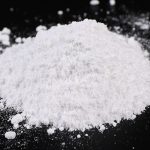
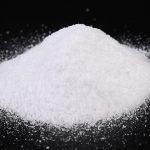
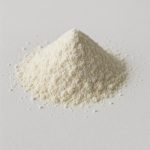
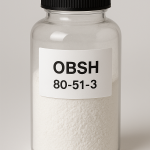
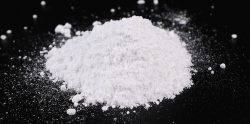
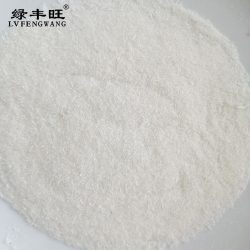
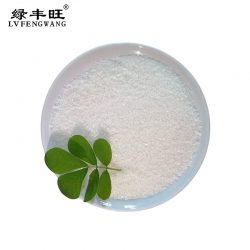
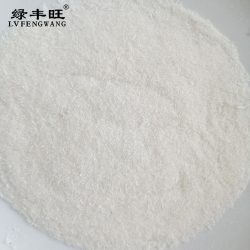
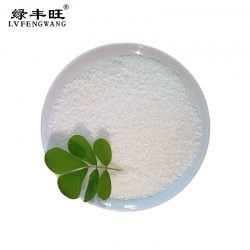
4,4′-Oxybis(benzenesulphonyl chloride) (OBSC) is a white crystalline powder. It has a minimum purity of 98% and a melting point not lower than 127℃. The maximum content of free moisture is 0.3%, and the maximum content of free acid is 0.2%. OBSC is an important organic compound with wide applications in the chemical and industrial fields. It is commonly used in the synthesis of pharmaceuticals, dyes, coatings, and high-molecular-weight materials. OBSC exhibits excellent chemical stability and reactivity, making it a valuable raw material for synthesizing intermediates and functional materials.
Chemical Properties
Molecular Formula: C12H8Cl2O2S2
Molecular Weight: 307.22 g/mol
Appearance: White to pale yellow solid
Solubility: Slightly soluble in water, soluble in organic solvents such as acetone, dichloromethane, and chloroform
The sulphonyl chloride groups make OBSC an effective electrophilic reagent in reactions involving nucleophilic substitution, especially in the synthesis of sulfonamide compounds and polycondensation reactions.
Applications of 4,4′-Oxybis(benzenesulphonyl chloride) (OBSC)
Polymer Chemistry
OBSC plays a key role in the synthesis of polyfunctional sulfonated polymers. By introducing sulfonyl groups into polymer chains, OBSC enhances the chemical resistance and thermal stability of the resulting polymers.
This is particularly useful in the development of high-performance materials used in:
Ion-exchange resins: OBSC-modified polymers exhibit improved ion-exchange properties, making them suitable for use in water treatment and industrial processes.
Conductive Polymers: OBSC is used to synthesize conductive polymers, which are crucial for applications in electronic devices, sensors, and energy storage.