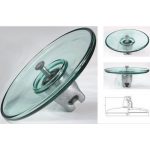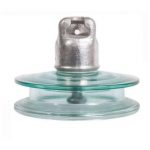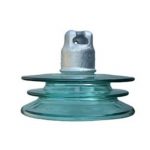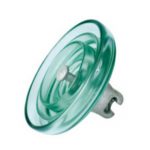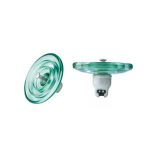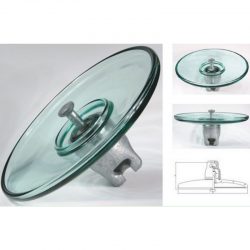
Aerodynamic Disc Suspension Glass Insulator
Compared to ordinary insulators, aerodynamic insulators are designed with aerodynamic characteristics in mind to enhance their stability and performance under external conditions such as wind. Furthermore, aerodynamic insulators play a crucial role in power transmission, providing insulation and support to ensure the safe operation of power systems.
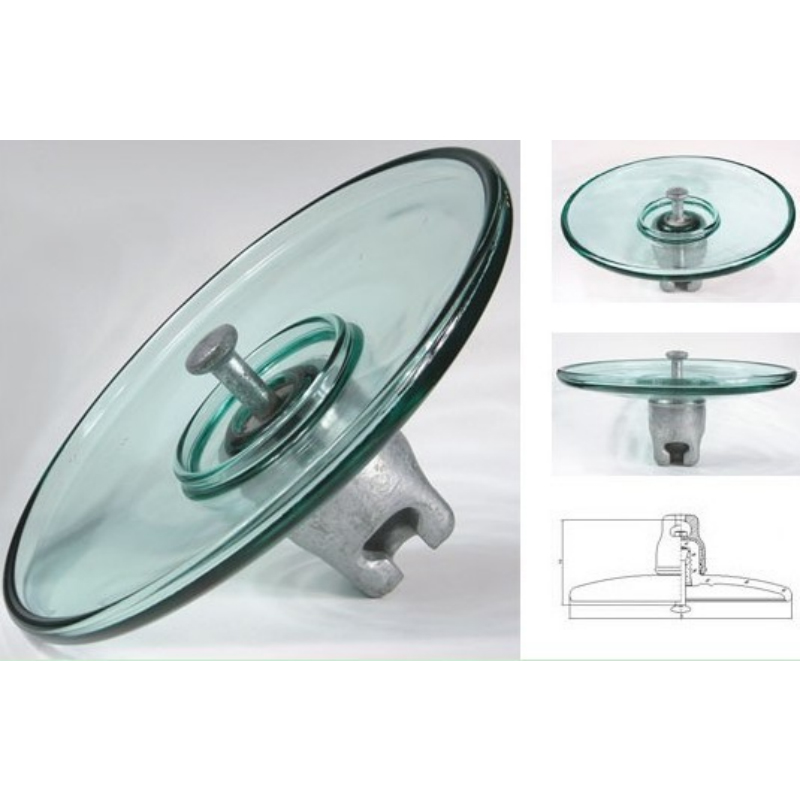
The Aerodynamic Suspension Disc Insulator from Weixiao is a high-performance glass insulator engineered for modern power transmission networks. Designed with aerodynamic principles, this insulator reduces wind-induced vibration and minimizes mechanical stress on transmission lines, ensuring reliability and longevity.
Features
Tempered glass disc — Large-diameter umbrella (380mm for 146M/155M series, 420–450mm for higher-load models) with a curved, edgeless lower profile. No sharp ribs or grooves that could trap sand or droppings.
Steel cap — Hot-dip galvanized for corrosion resistance; ball-socket connection type (M pattern) for compatibility with standard hardware fittings.
Steel foot (pin) — Matched to the cap socket; provides the mechanical load transfer path within the string.
Cement bonding layer — Locks the glass disc to the cap and foot assembly; retains the glass’s thermal stress pre-load which enables the self-breaking detection mechanism.
Aerodynamic Suspension Disc Insulator Advantages
Reduced wind resistance — The aerodynamic profile lowers the drag coefficient compared to standard open-type discs, directly reducing the mechanical load transferred to tower structures in high-wind events.
Passive self-cleaning — The smooth, edgeless underside allows rain and wind to flush contaminants from the disc surface without manual intervention, preserving leakage path integrity between maintenance cycles.
Bird dropping protection — The wide umbrella acts as a physical shield; a single unit placed at the top of a string provides coverage for the units below.
Ground-detectable degradation — Thermally pre-stressed glass shatters visibly when a unit loses electrical integrity — maintenance crews can identify failed units from the ground, eliminating routine pole-climbing insulation tests.