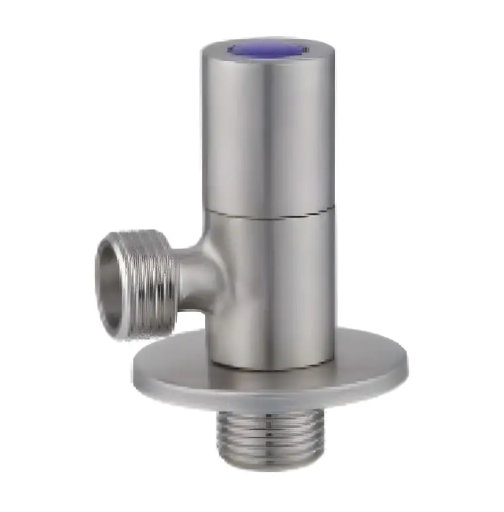
How to Evaluate an Angle Valve Manufacturer
What defines the core design and application of angle valves
A professional angle valve Manufacturer specializes in valves where the inlet and outlet ports are oriented at a 90-degree angle. This design allows the valve to change flow direction while serving as a shut-off or regulating point, often saving space by fitting into pipe elbows. Common types include angle globe valves for precise throttling and angle ball valves for quick on/off service. Their primary applications are in steam systems, instrumentation take-off points, radiator connections, and locations where piping layouts benefit from a directional change, reducing the need for additional fittings and potential leak points.
How are materials and pressure integrity engineered for specific services
Material selection is critical due to the directional flow path, which can increase erosion on certain surfaces. A reputable angle valve Manufacturer offers bodies in bronze, cast steel, stainless steel, and alloys like Monel. The internal trim—including the plug, seat, and stem—is often made from hardened or corrosion-resistant materials. Pressure integrity is validated through Finite Element Analysis during design and rigorous hydrostatic and pneumatic testing post-manufacture. The manufacturer must match the valve’s pressure-temperature rating (per ANSI B16.34 or equivalent) to the specific service, whether for high-pressure steam, corrosive chemicals, or hot water systems.
What seat and seal technologies ensure long-term leak-tight performance
The sealing system is paramount. A proficient angle valve Manufacturer utilizes various seat and seal technologies based on the application. For globe-style angle valves, this may involve metal-to-metal seating for high temperatures or resilient inserts like PTFE for bubble-tight shut-off. For angle ball valves, they may offer reinforced PTFE seats, nylon seats, or metal-seated versions for abrasive services. Stem sealing typically uses graphite packing for high-temperature steam or multiple Chevron V-rings for standard services. The manufacturer’s expertise in selecting and machining these sealing elements determines the valve’s service life and maintenance frequency.
What customization and actuation options are typically available
Standard valves may not fit all layouts. A capable angle valve Manufacturer provides customization such as extended stems for insulated lines, special end connections (SW, NPT, BW), lockable handles, or specific material trims. Actuation options are wide-ranging, from simple handwheels and levers to gear operators for high-torque applications and automated electric or pneumatic actuators for remote control. The ability to supply the valve as a complete package—body, actuator, limit switches, and controls—adds significant value for automated process lines.












![Kinzeno Customer Reviews – [Kinzeno Official Website] Everyday Relief & Support](https://manufacturers.network/btabcloud/uploads/2026/08/dsd-1787049210p4cl8-250x179.jpg)