Water Soluble Watercolor Marker Manufacturers Bridge Drawing and Painting Techniques
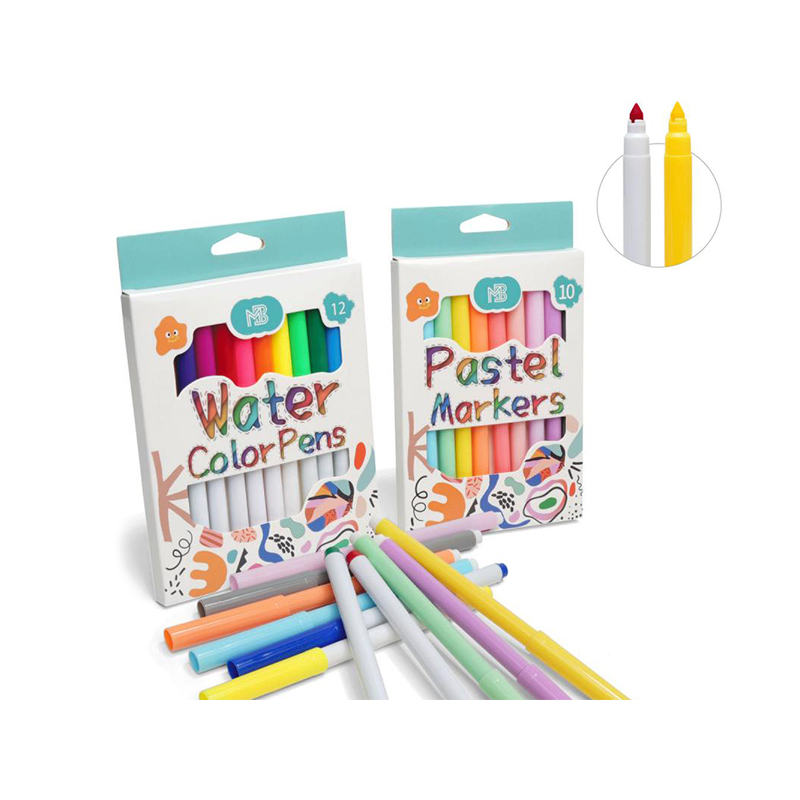
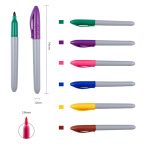
The water soluble watercolor marker has become a useful tool for artists who want the line control of a marker combined with the blending capability of watercolor paint. The ink, formulated with water-soluble resins and pigments, dissolves when a wet brush is passed over it, spreading across the paper like traditional pan watercolor. This dual nature—dry marker for crisp lines, wet brush for washes—makes it a practical choice for urban sketchers, travel artists, and illustrators who want to pack light without giving up versatility.
The ink composition is the defining feature of these markers. Unlike alcohol-based or permanent markers, the pigment particles in water soluble markers are suspended in a binder that remains soluble after drying. When water is applied, the binder dissolves and releases the pigment, allowing it to flow with the water across the paper. The degree of solubility varies between brands, with some colors lifting almost completely and others leaving a stain. This variable behavior is not a flaw but a characteristic that artists learn to work with, using some colors for the initial sketch and others for the final wash.
The tip selection affects how the marker is used. Fine tips produce detailed linework that can be softened with water to create shading. Broad tips cover larger areas and are used for quick blocking in. Some markers use a bullet tip for all-purpose work. The choice depends on the artist’s workflow and the scale of the work.
The paper choice also affects the marker’s performance. Smooth papers encourage crisp lines but hold less water, while rougher watercolor papers provide better wash distribution. Manufacturers often provide guidance on compatible paper types, though artists generally discover their preferences through trial. The marker is also used in mixed-media work alongside pencils, pens, and other markers.
The travel-friendly nature of water soluble watercolor markers has made them popular among sketchers who paint on location. The marker replaces several items in the kit: watercolor paints, brushes for fine work, and sometimes pens. The immediate availability of color is valued by artists who work outdoors. The markers also require less cleanup than traditional watercolor sets.
The market for water soluble watercolor markers includes fine art retailers, craft stores, and specialty stationery shops. The markers are often sold open-stock, allowing artists to build their own color sets. The range includes primary colors, earth tones, and muted shades for urban sketching. Some manufacturers offer starter sets with an introductory selection.
Artists value water soluble markers for their responsiveness to water. Some apply water with a brush, others spray it on, and some use damp brushes. The results vary according to the amount of water used and the timing, allowing for a range of textures and washes. Many art educators also use these markers in classroom settings, where the balance between control and unpredictability encourages students to explore the materials.
Water soluble watercolor markers continue to be a reliable category within the art materials market. Their performance in sketching, illustration, and mixed-media work has kept them relevant. Manufacturers continue to refine the pigment load and solubility characteristics, with the goal of making the ink easier to use and less prone to fading. The category supports a range of artistic practices.













![LifeGauge Breeze Recensioni: Funziona Davvero? Opinioni [LifeGauge Breeze Come Funziona] e Risultati](https://manufacturers.network/btabcloud/uploads/2026/08/etrttre-1787037810c4pl8-250x150.png)